23 August 1989 · 19:00
The Baltic Way
From Tallinn to Vilnius, stop by stop
About two million people joined hands for fifteen minutes and formed a human chain of about 675 km, from Tallinn through Rīga to Vilnius. It marked 50 years since the Molotov–Ribbentrop Pact, whose secret protocols divided the region between the Soviet Union and Nazi Germany.
- 2,000,000people, by most estimates
- 675 kmfrom Toompea in Tallinn to Gediminas Tower in Vilnius
- 15 minhand in hand, from 19:00 local time
- 50years since the Molotov–Ribbentrop Pact
- 3movements: Rahvarinne, Tautas fronte and Sąjūdis
- 38documents in UNESCO’s Memory of the World Register
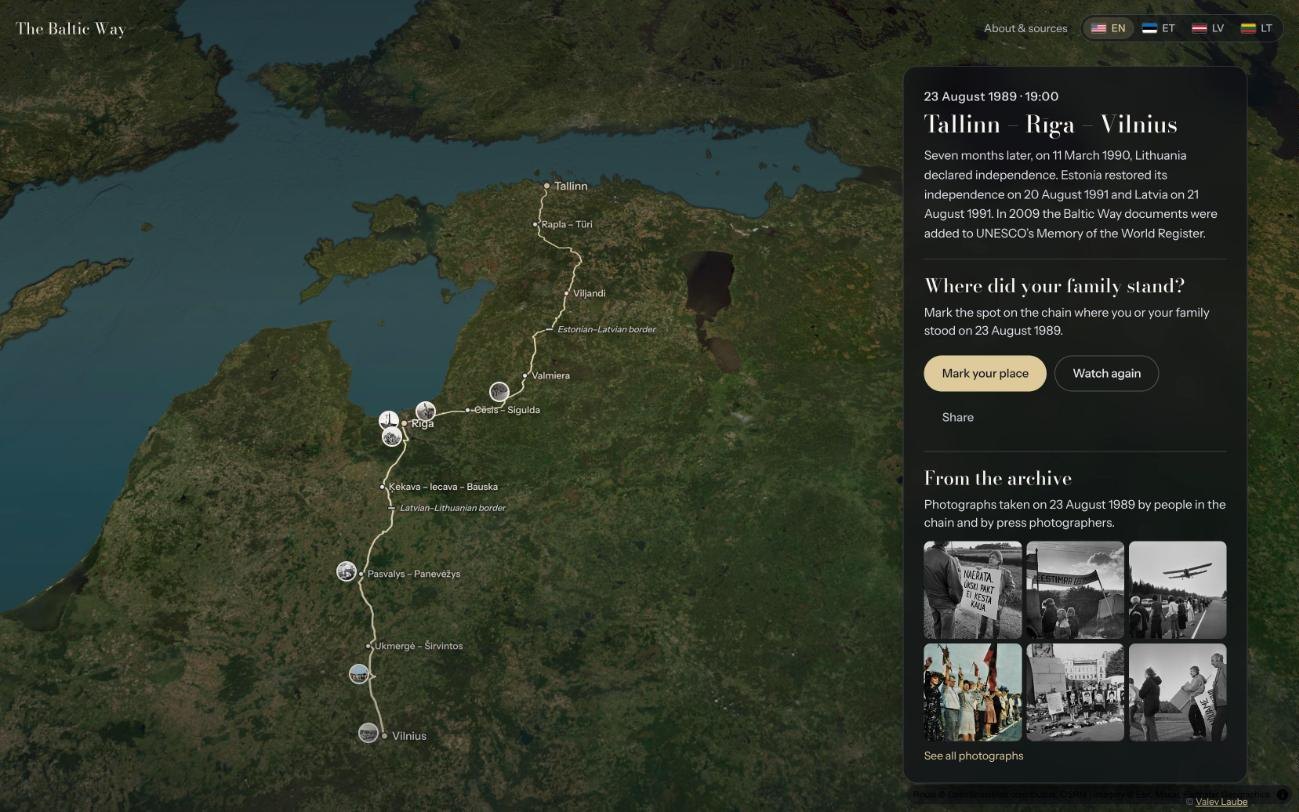
A four-minute flight along the whole chain, with these photographs placed where they were taken. At the end, you can mark where your family stood.
Stop by stop
Estonia
Tallinn
In Estonia the chain was organized by the Popular Front, Rahvarinne, and the day was declared a public holiday. At 19:00 Estonian Radio went live from Toompea, beside the Tall Hermann tower, where the Estonian flag had flown since 24 February 1989.
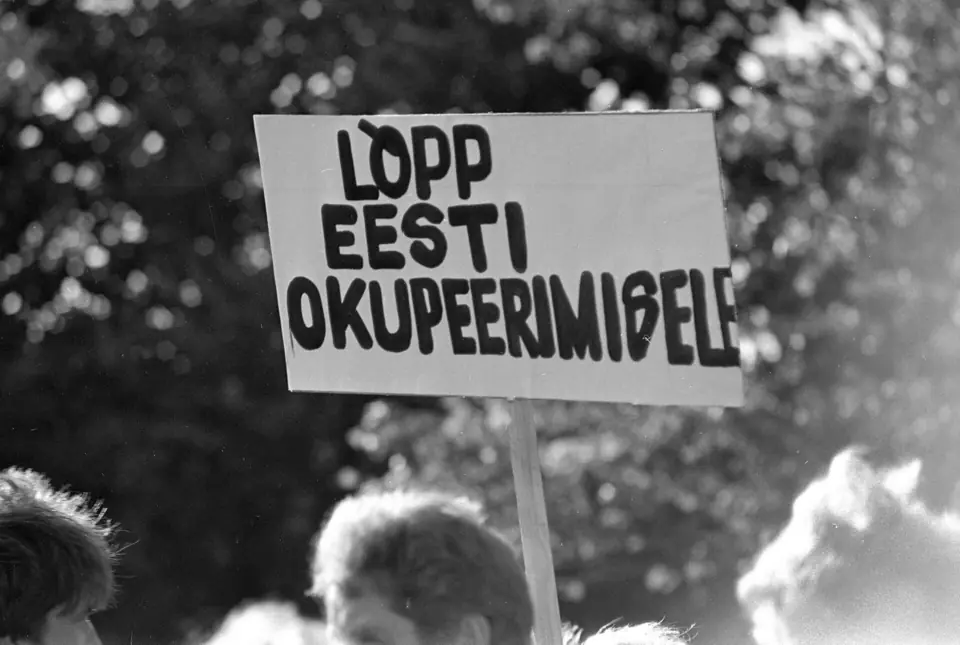
A placard in Estonia: “End the occupation of Estonia”.Jaan Künnap · CC BY-SA 4.0 · Wikimedia Commons 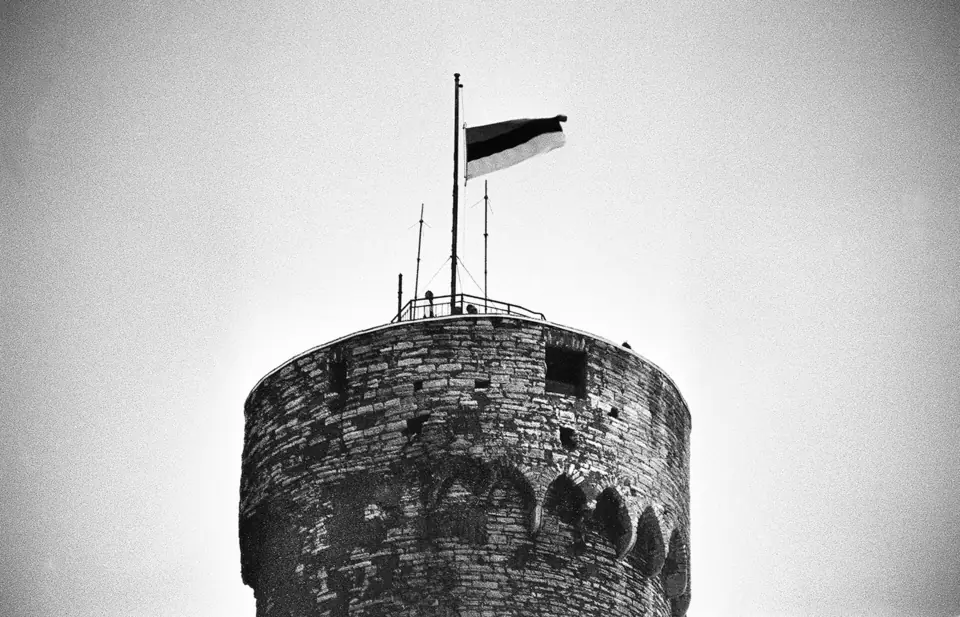
The Estonian flag is raised on Tall Hermann tower in Tallinn on the morning of 24 February 1989.Jaan Künnap · CC BY-SA 4.0 · Wikimedia Commons 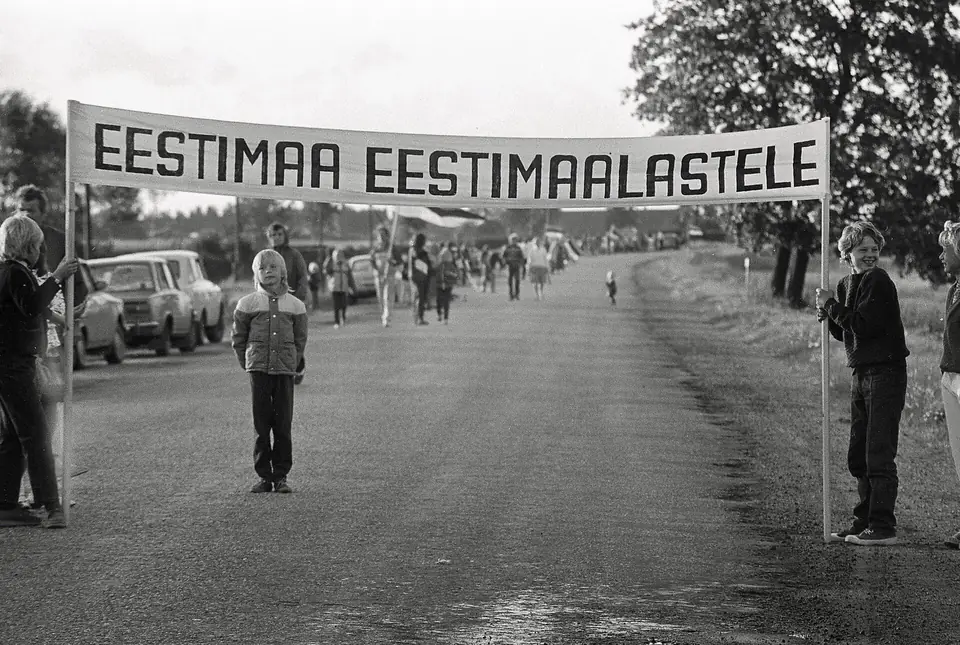
A banner across the road: “Eestimaa eestimaalastele” (Estonia for the people of Estonia).Jaan Künnap · CC BY-SA 4.0 · Wikimedia Commons 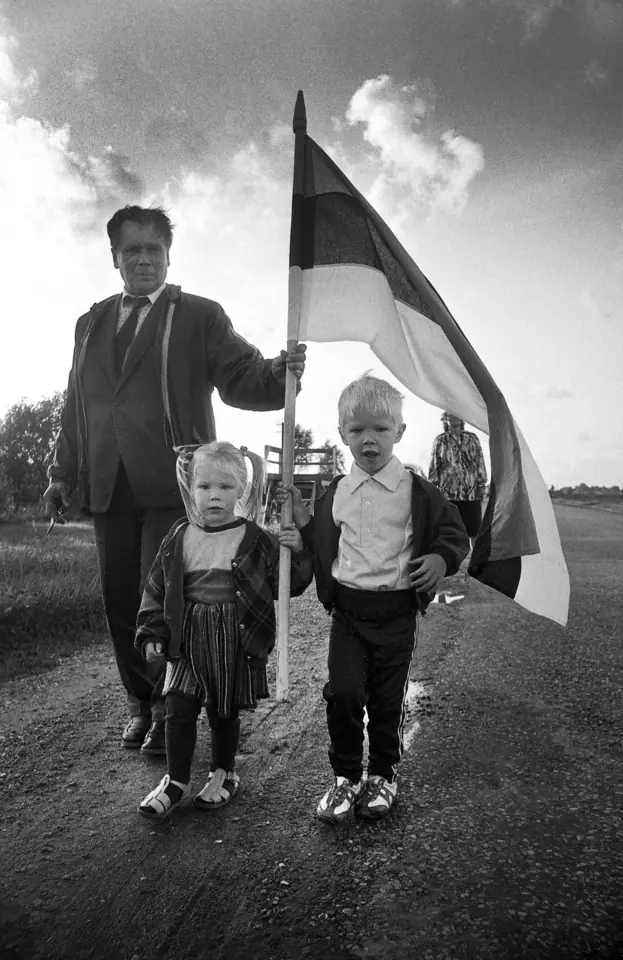
A father with two small children and the Estonian flag.Jaan Künnap · CC BY-SA 4.0 · Wikimedia Commons Listen: Estonian Radio, 19:00–19:55, live from Toompea — Heinz Valk at 0:55, church bells at 3:19, Marju Lauristin at 5:55
Estonia
Rapla – Türi
The Estonian stretch was first planned through Pärnu. In early August the route was changed to run inland, through Rapla, Türi and Viljandi. Monuments to the Baltic Way at Käru and Särevere were unveiled a few hours before the chain formed.
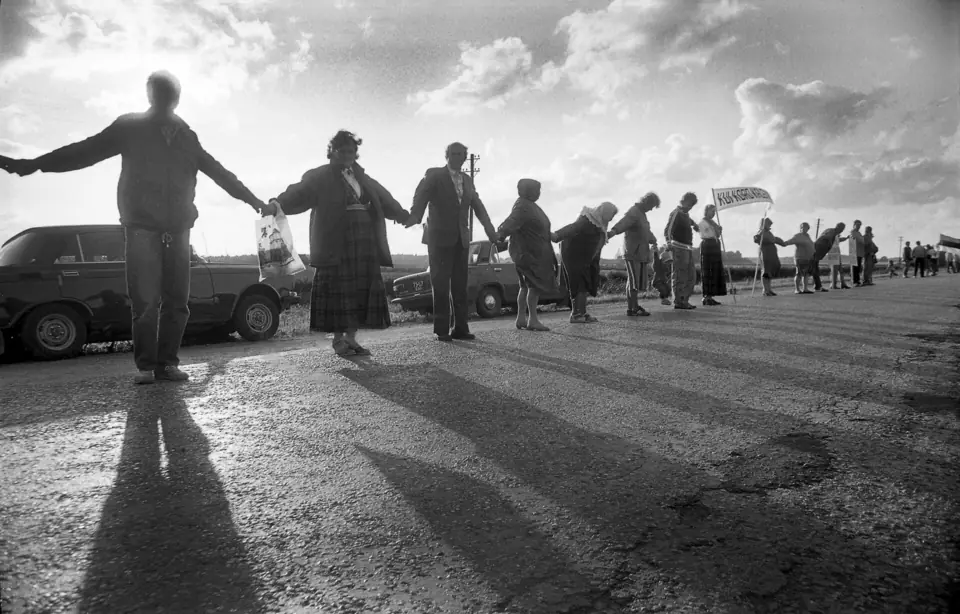
Holding hands along the road in Estonia.Jaan Künnap · CC BY-SA 4.0 · Wikimedia Commons 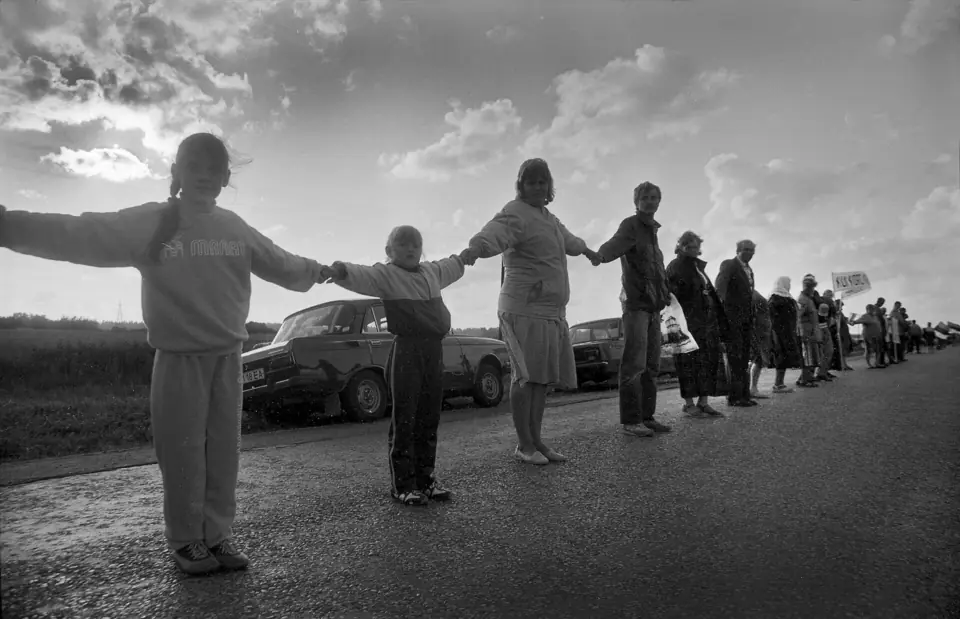
Arms outstretched along the road in Estonia.Jaan Künnap · CC BY-SA 4.0 · Wikimedia Commons 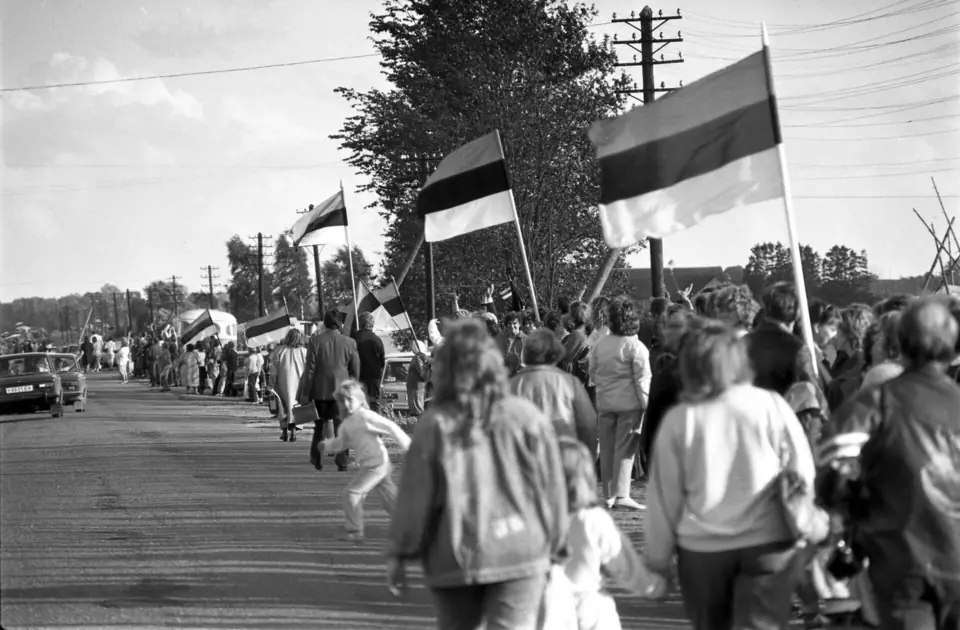
Families with flags walk along the road to their place in the chain.Jaan Künnap · CC BY-SA 4.0 · Wikimedia Commons 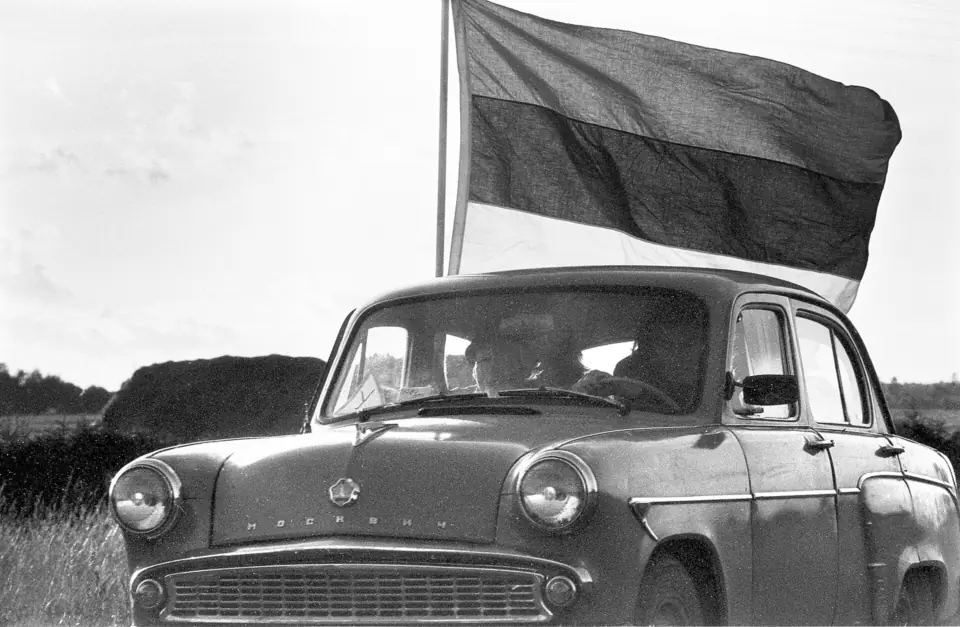
An old Soviet car flying the Estonian flag.Jaan Künnap · CC BY-SA 4.0 · Wikimedia Commons Listen: Estonian Radio, 17:00–17:50 — Reports from Rapla at 8:58 and Türi at 10:24
Estonia
Viljandi
From 17:00 Estonian Radio ran a three-hour live program, “Meie hoiame ühte” (We Hold Together): songs, poems, reports from along the route and traffic news. Many people stood with portable radios. Along the Estonian section, the word “Freedom” was passed from mouth to mouth.
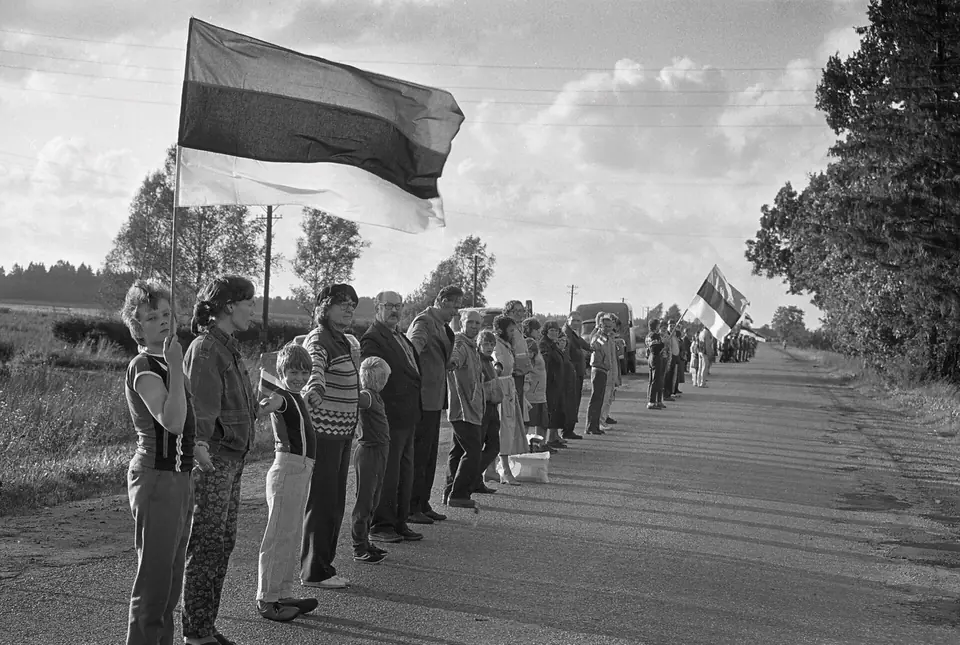
Waiting by the road with the Estonian flag.Jaan Künnap · CC BY-SA 4.0 · Wikimedia Commons 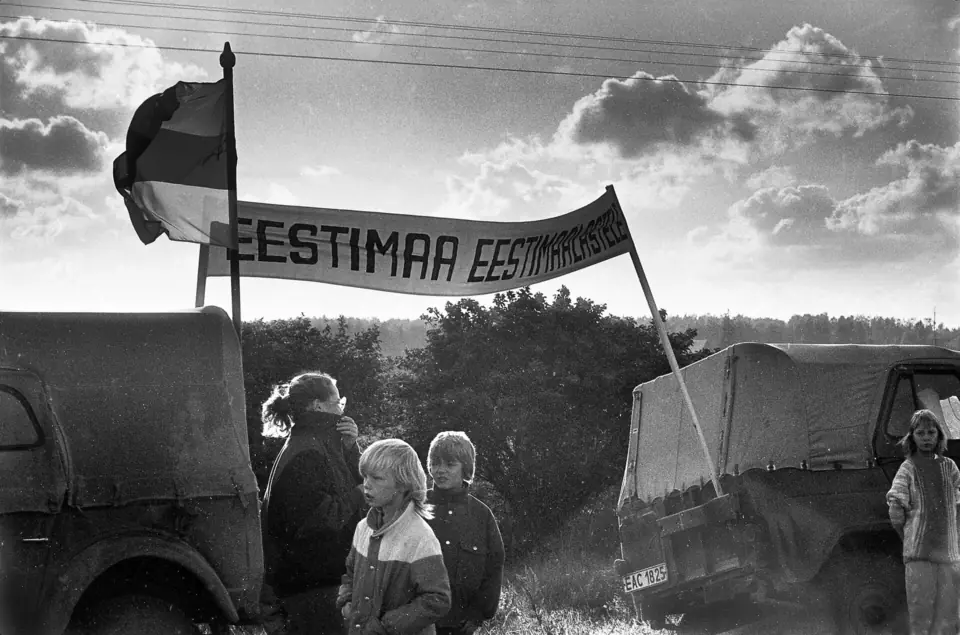
The chain across open fields in Estonia.Jaan Künnap · CC BY-SA 4.0 · Wikimedia Commons 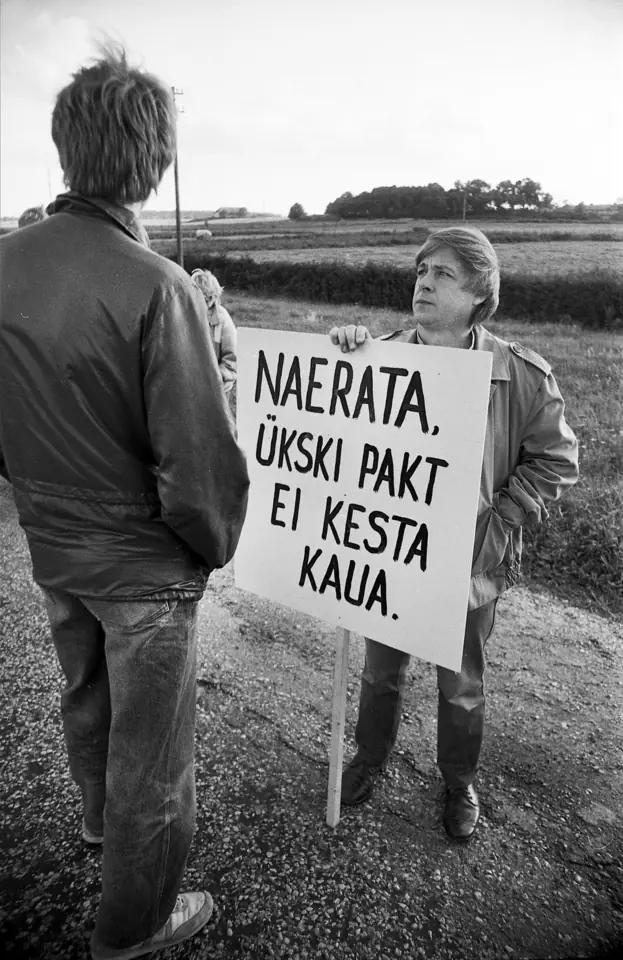
“Smile. No pact lasts long.”Jaan Künnap · CC BY-SA 4.0 · Wikimedia Commons 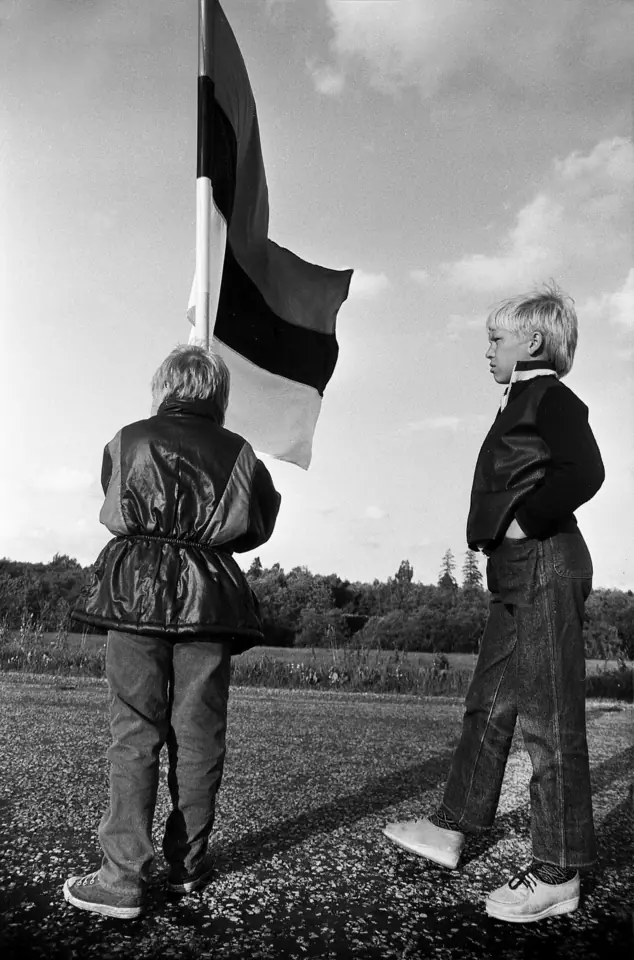
Two women with flags in open country.Jaan Künnap · CC BY-SA 4.0 · Wikimedia Commons Listen: Estonian Radio, 17:50–18:30 — A report from Viljandi at 0:00
Estonia
Estonian–Latvian border
Leaders of the Estonian and Latvian Popular Fronts gathered at the border, where a giant black cross was set alight. After the chain, many people came here, between Nuia and Rūjiena, to burn slogans of the totalitarian regimes in bonfires.
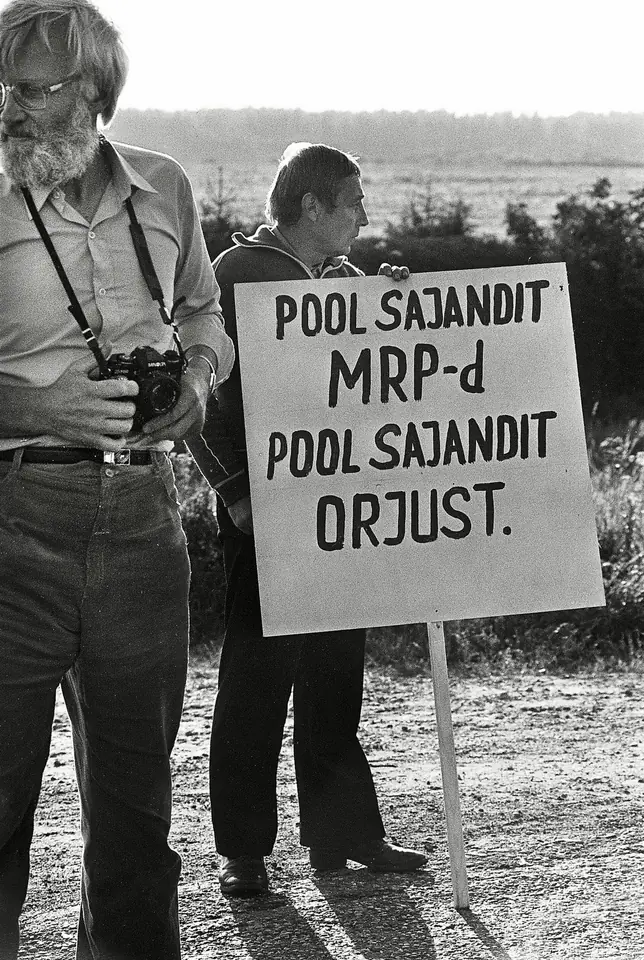
“Half a century of the MRP, half a century of slavery.” MRP is the Molotov–Ribbentrop Pact.Jaan Künnap · CC BY-SA 4.0 · Wikimedia Commons 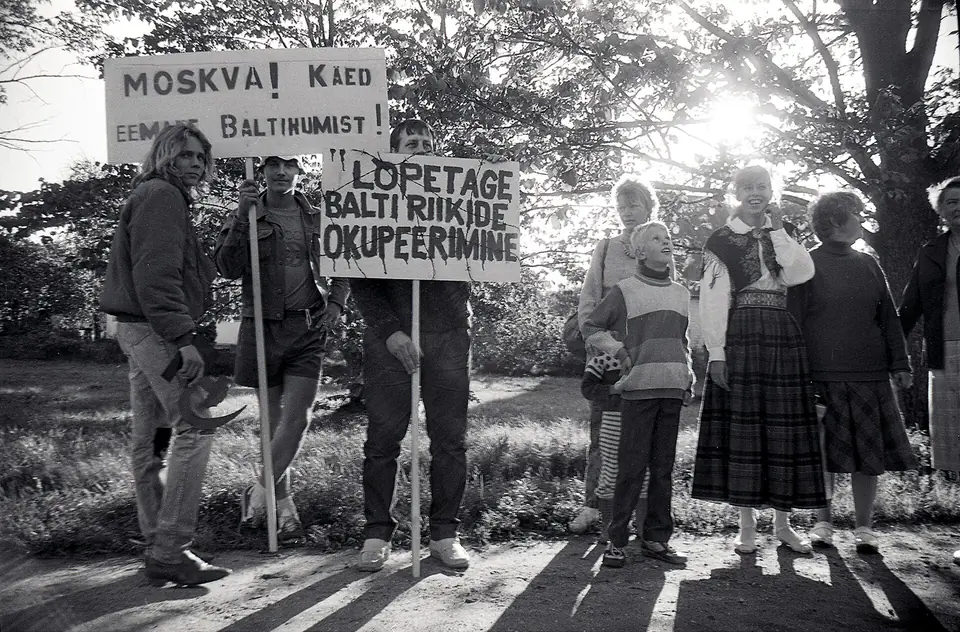
Placards by the road: “Moscow! Hands off the Baltics!” and “End the occupation of the Baltic states.”Jaan Künnap · CC BY-SA 4.0 · Wikimedia Commons 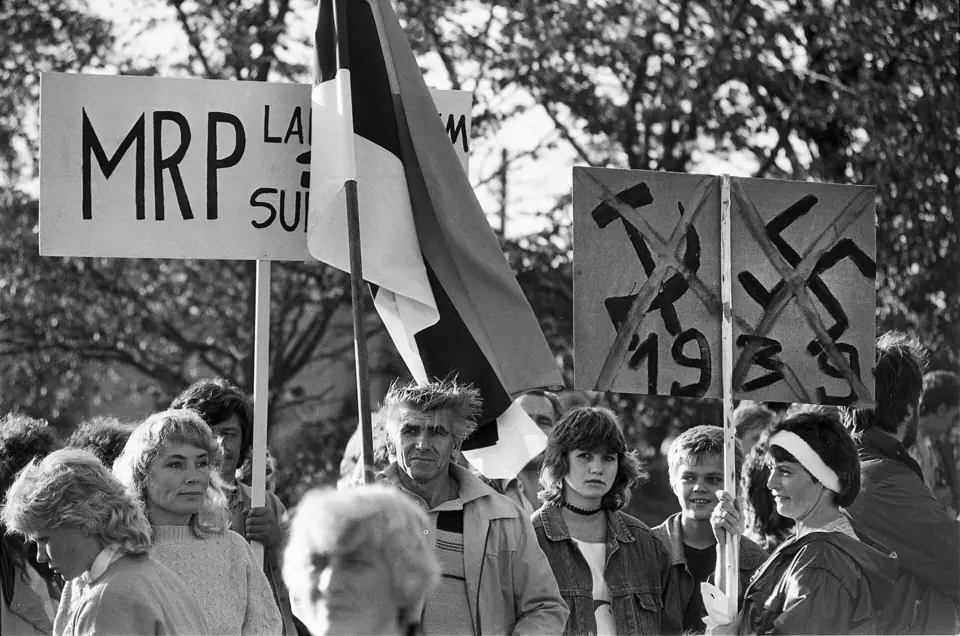
Placards marking 50 years since the Molotov–Ribbentrop Pact of 1939.Jaan Künnap · CC BY-SA 4.0 · Wikimedia Commons 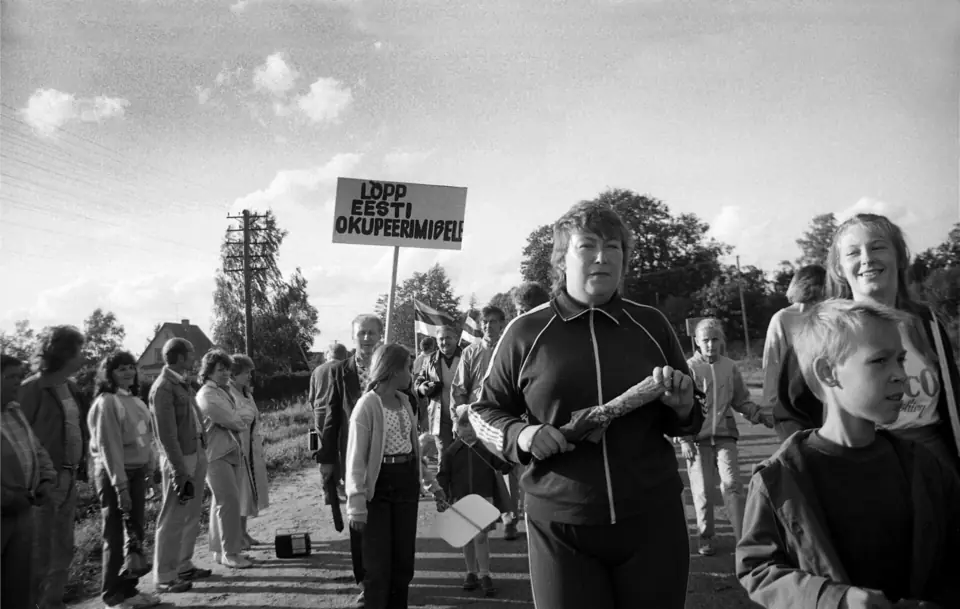
Waiting by the road with the placard “End the occupation of Estonia”.Jaan Künnap · CC BY-SA 4.0 · Wikimedia Commons Listen: Estonian Radio, 18:30–19:00 — A report from Nuia at 18:24
Latvia
Valmiera
In Latvia the chain was organized by the Popular Front of Latvia, which estimated that about 400,000 Latvians took part.
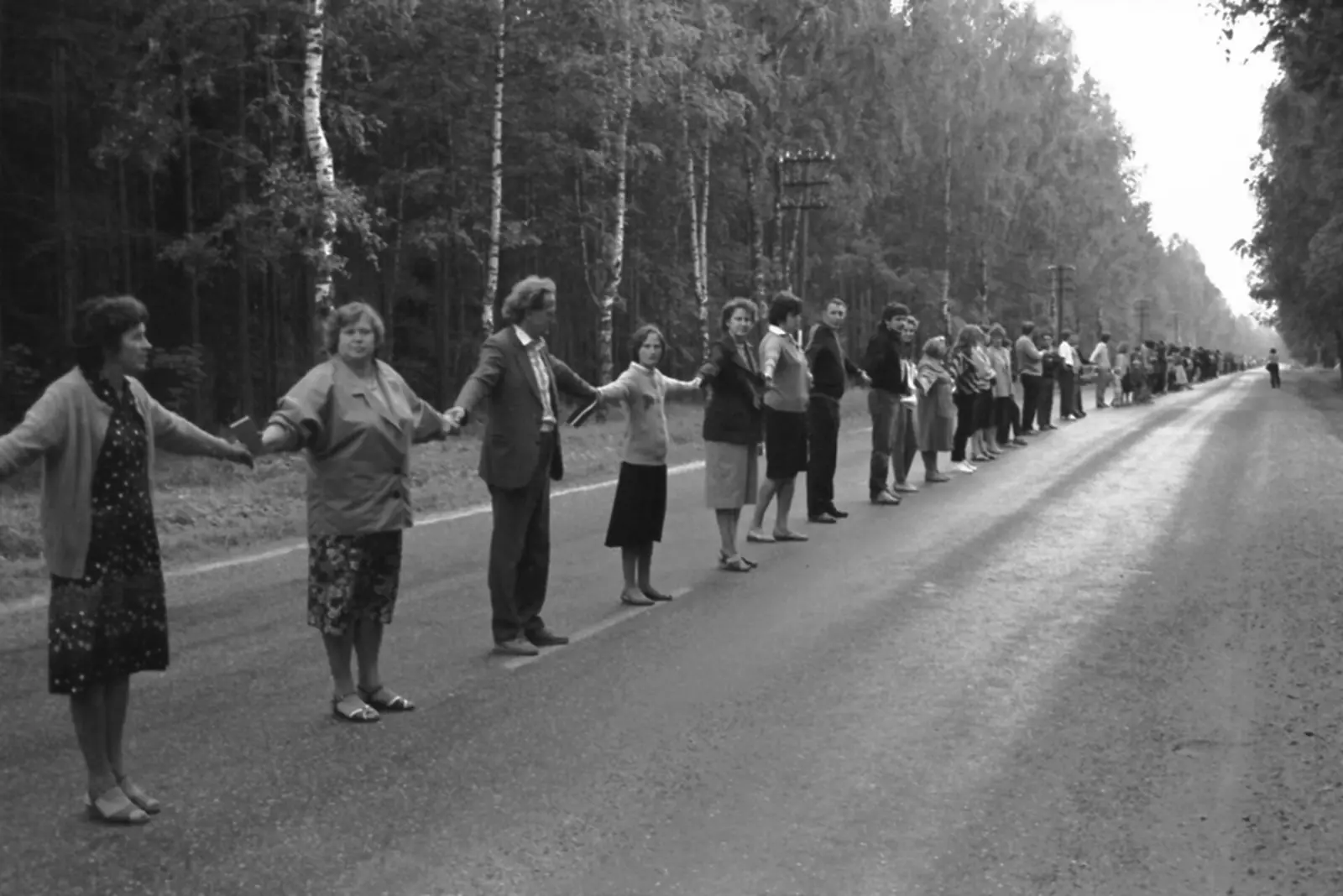
At the 10th kilometer of the Cēsis–Valmiera road.Laimonis Stīpnieks · CC BY-SA 4.0 · Wikimedia Commons Listen: Estonian Radio, 18:30–19:00 — Estonian Radio’s correspondent in Latvia at 4:15
Latvia
Cēsis – Sigulda
Free buses took people to their assigned stretch of road. Some employers sponsored them; others refused to give workers the day off. Footage filmed from airplanes and helicopters showed an almost continuous line of people across the countryside.
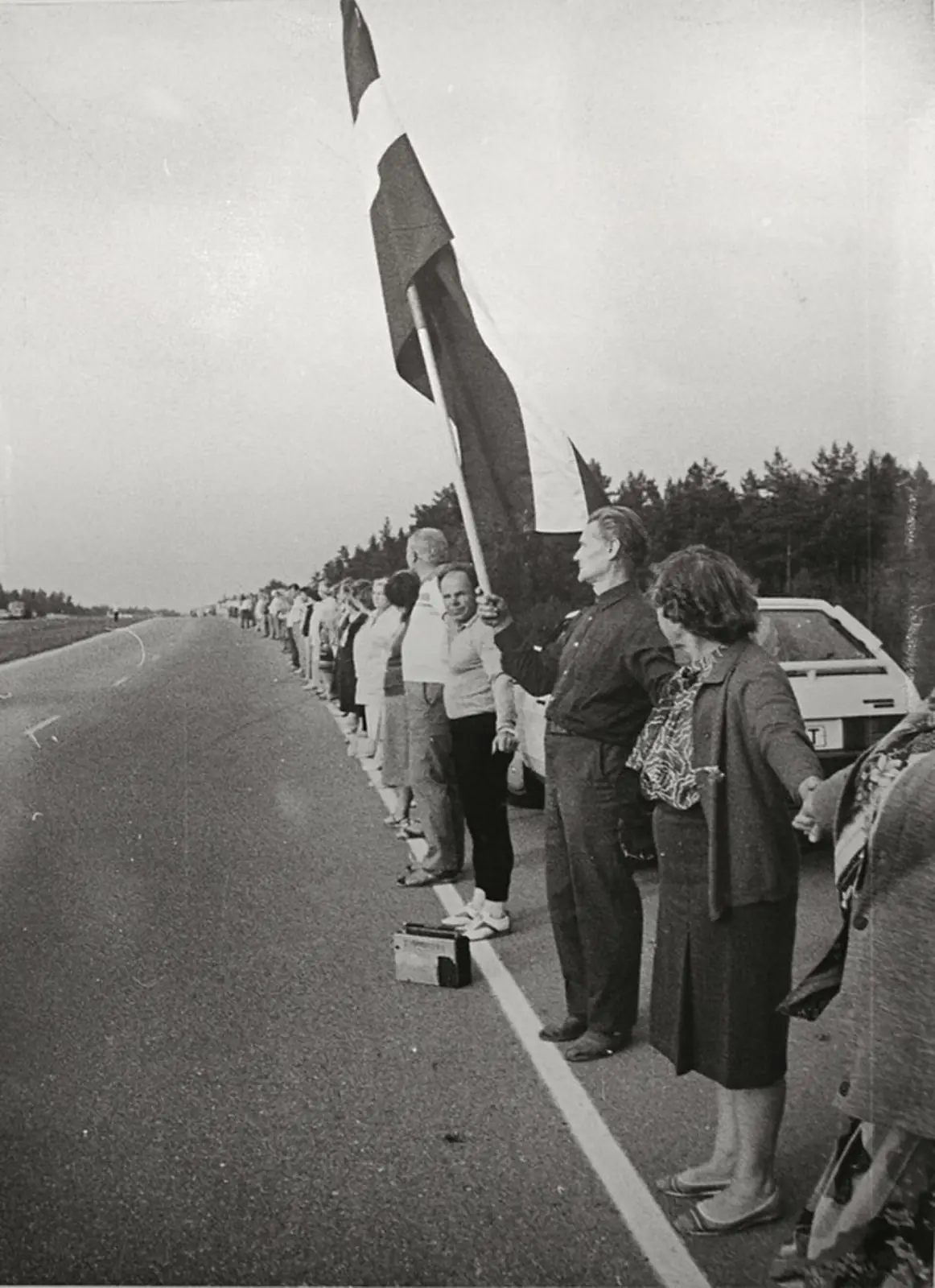
On the Rīga–Pskov highway near Ropaži.Valdis Vīksne · CC BY-SA 4.0 · Wikimedia Commons Latvia
Rīga
The chain crossed Rīga, the middle link between the three capitals. Two years earlier, on 23 August 1987, people had laid flowers at the Freedom Monument on the anniversary of the Molotov–Ribbentrop Pact, and the crowd was dispersed.
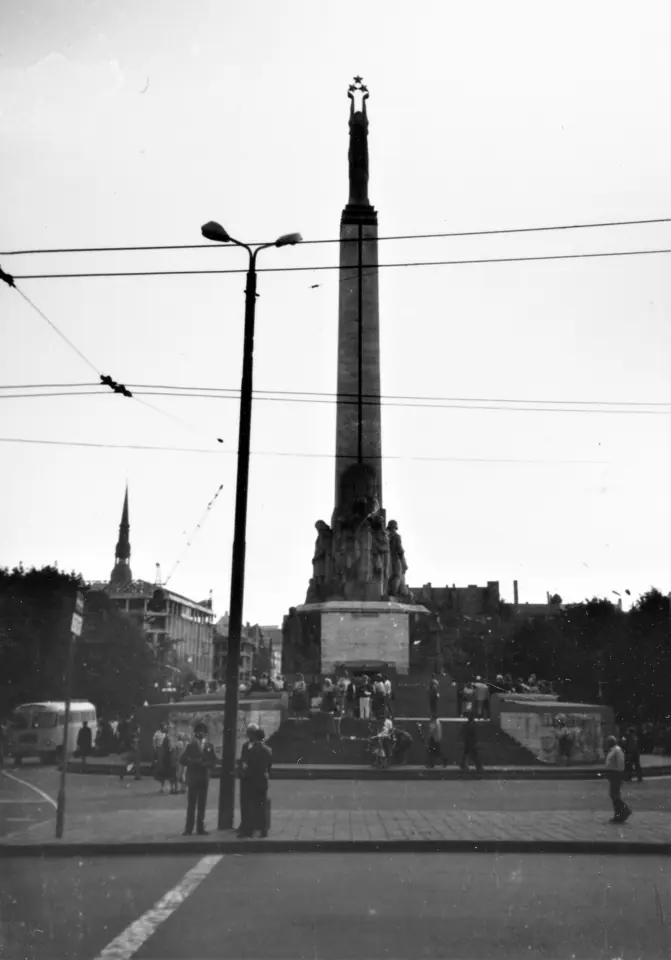
Young people at the foot of the Freedom Monument in Rīga.Unknown author · CC BY-SA 4.0 · Wikimedia Commons 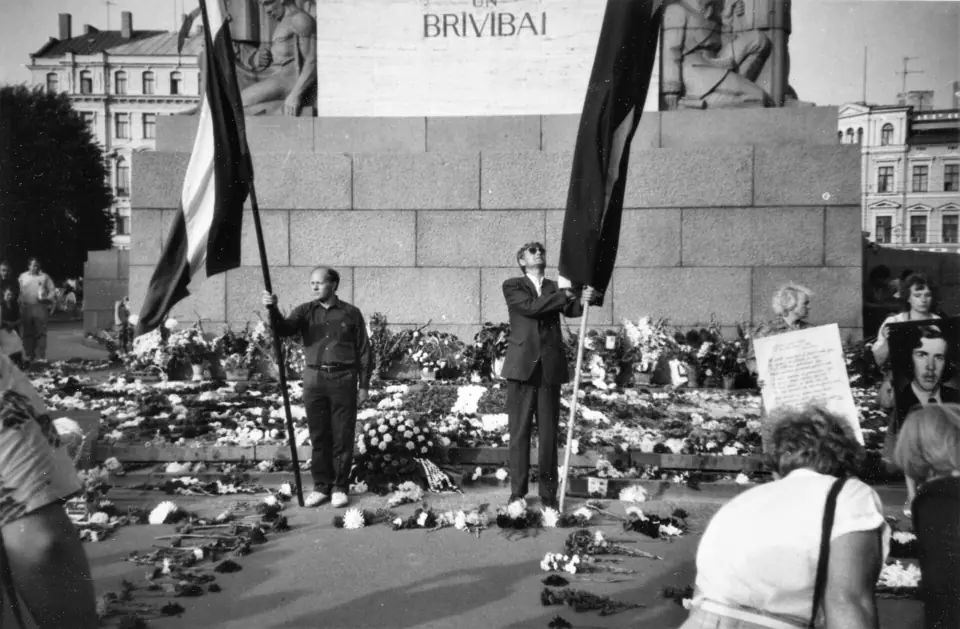
Flags and speakers at the Freedom Monument in Rīga.Unknown author · CC BY-SA 4.0 · Wikimedia Commons 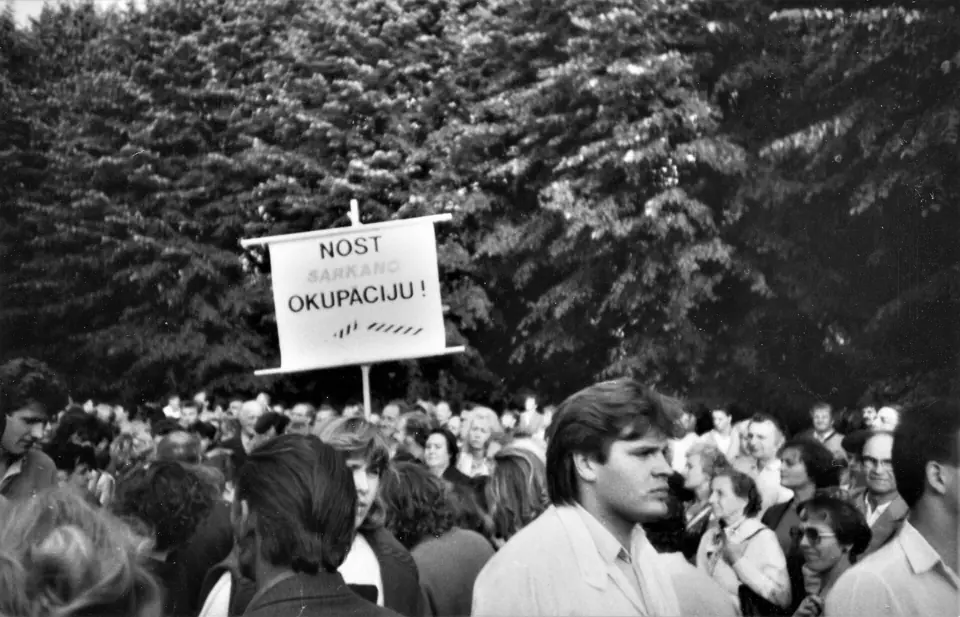
“Nost okupāciju!” (Down with the occupation!) on Brīvības bulvāris in Rīga.Unknown author · CC BY-SA 4.0 · Wikimedia Commons 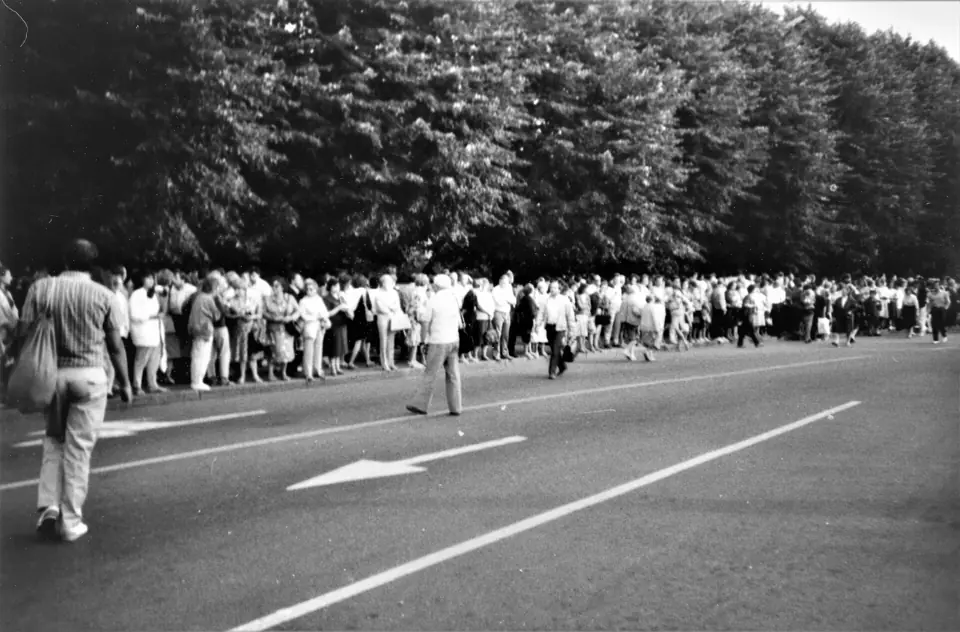
The chain along Brīvības bulvāris in Rīga.Unknown author · CC BY-SA 4.0 · Wikimedia Commons 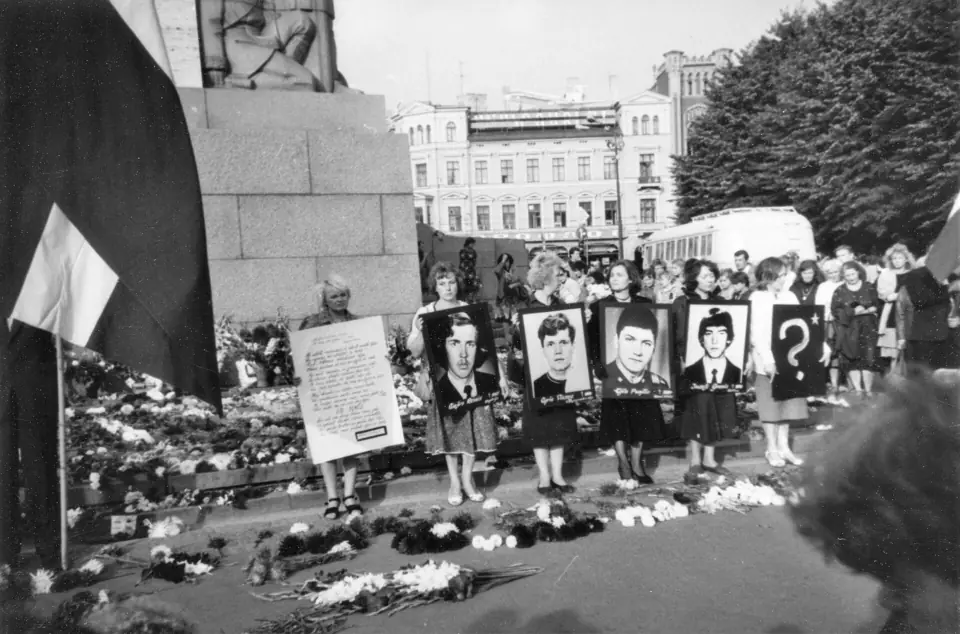
At the foot of the Freedom Monument in Rīga, women hold up portraits of young men and a question mark.Unknown author · CC BY-SA 4.0 · Wikimedia Commons 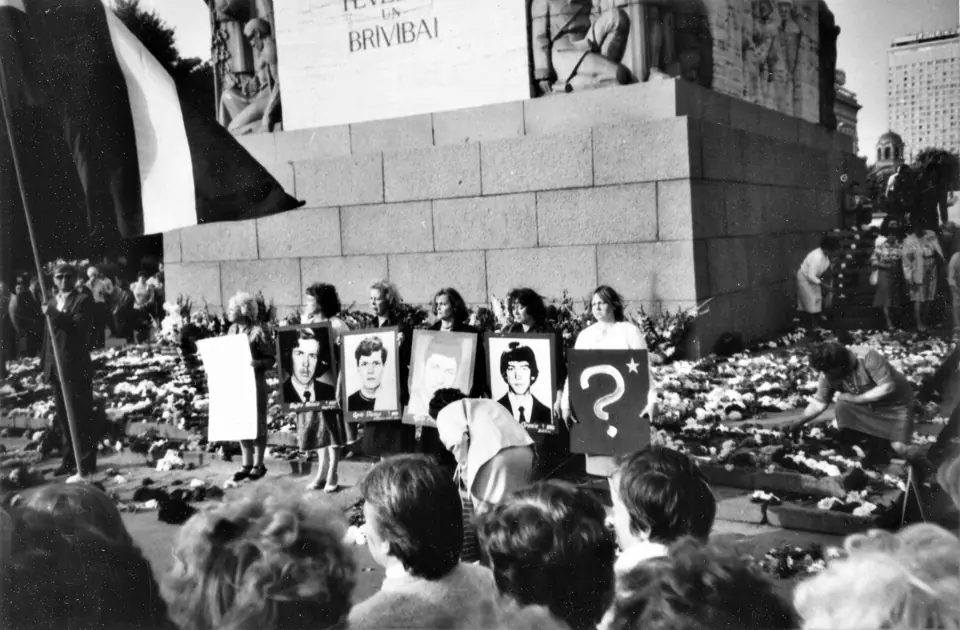
Flowers at the foot of the Freedom Monument in Rīga.Unknown author · CC BY-SA 4.0 · Wikimedia Commons 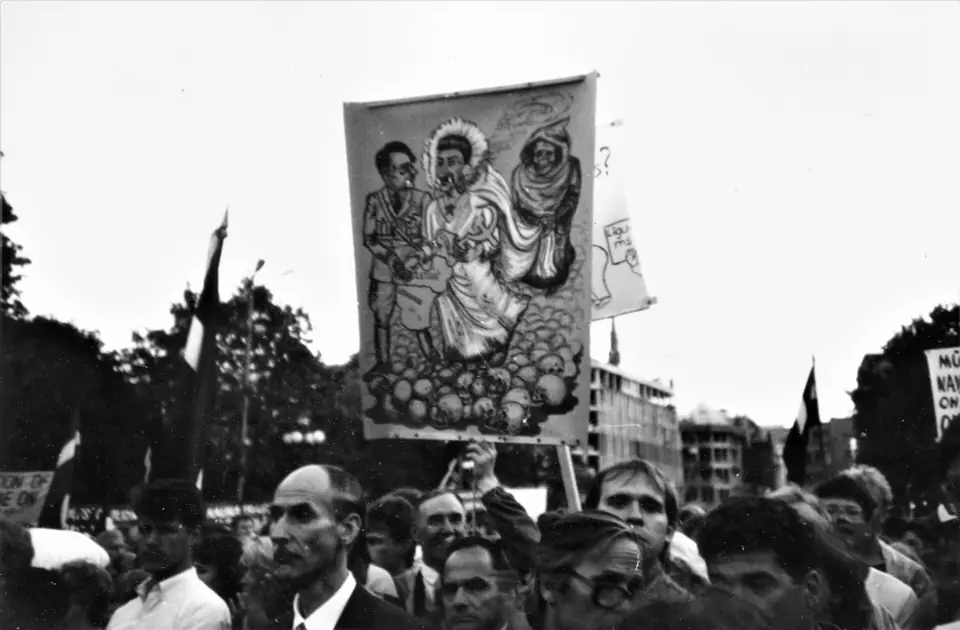
A painted banner caricaturing Hitler, Stalin and their 1939 pact, raised above the crowd near the Freedom Monument in Rīga.Unknown author · CC BY-SA 4.0 · Wikimedia Commons Latvia
Ķekava – Iecava – Bauska
South of Rīga the chain followed the Via Baltica road through Ķekava, Iecava and Bauska towards Lithuania.
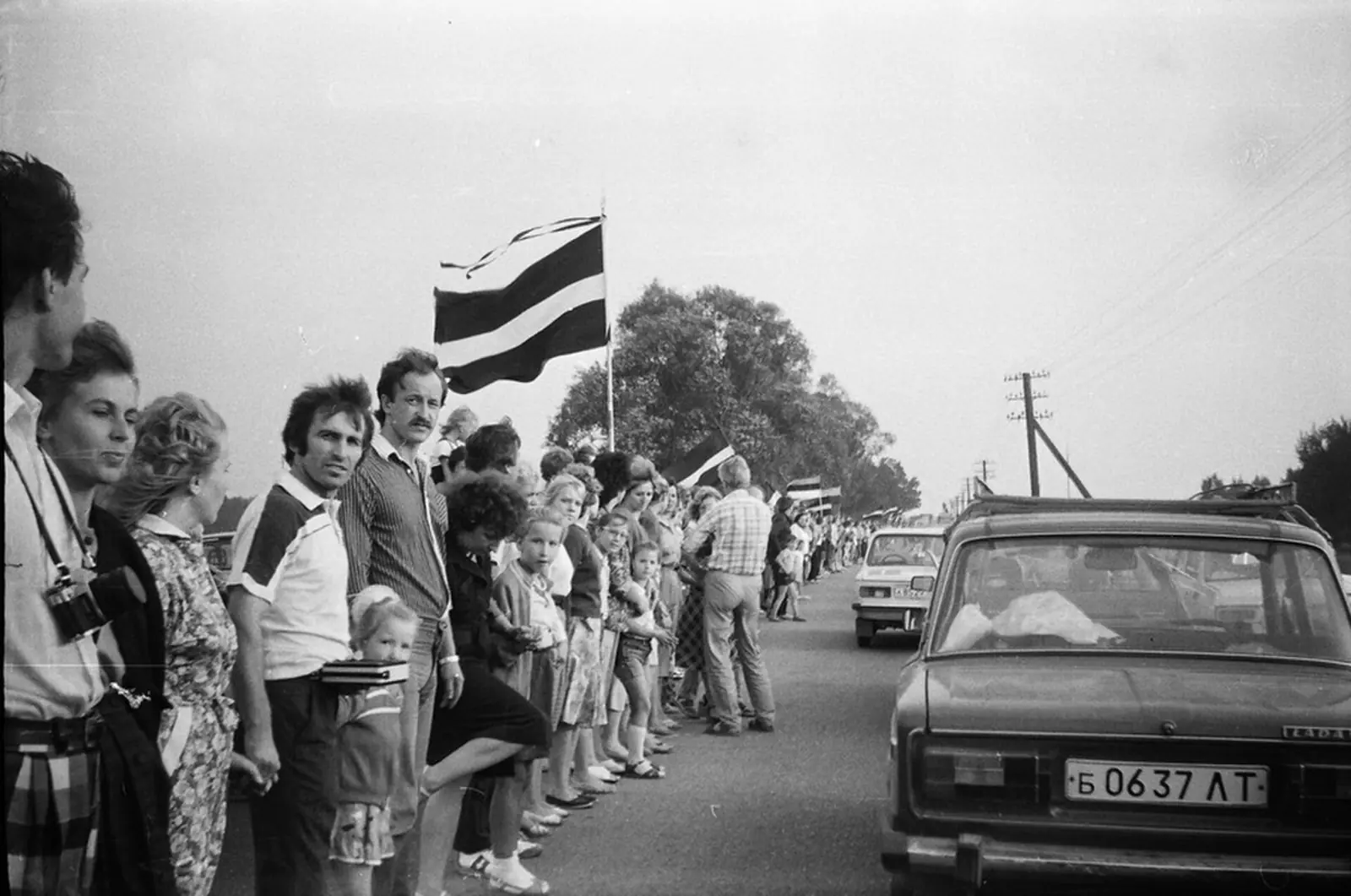
On the Rīga–Bauska highway near Ķekava.Uldis Pinka · CC BY-SA 4.0 · Wikimedia Commons Lithuania
Latvian–Lithuanian border
In Lithuania the chain was organized by Sąjūdis. The Lithuanian section was about 220 km long.
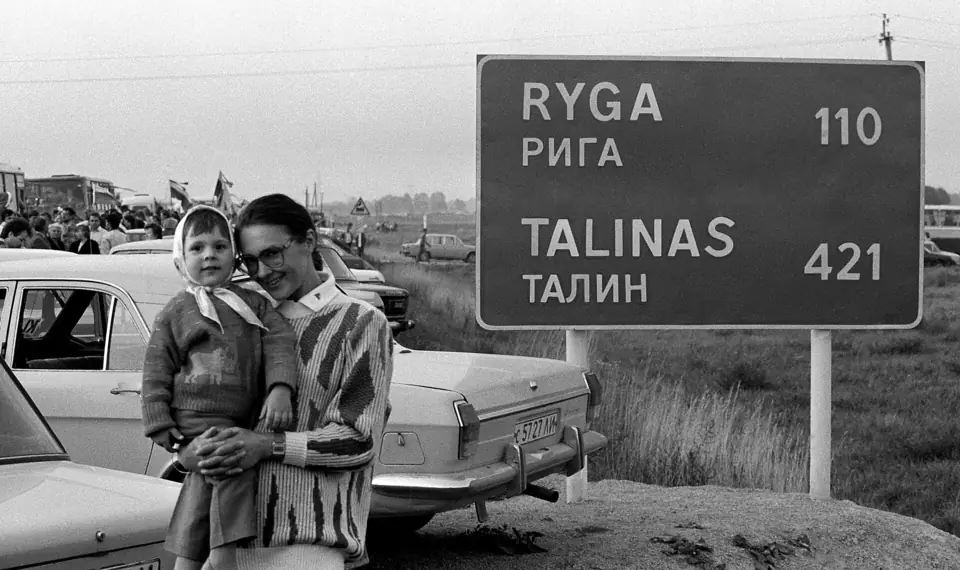
A road sign in the Pasvalys district of Lithuania: 110 km to Rīga, 421 km to Tallinn.Kusurija · CC BY-SA 3.0 · Wikimedia Commons 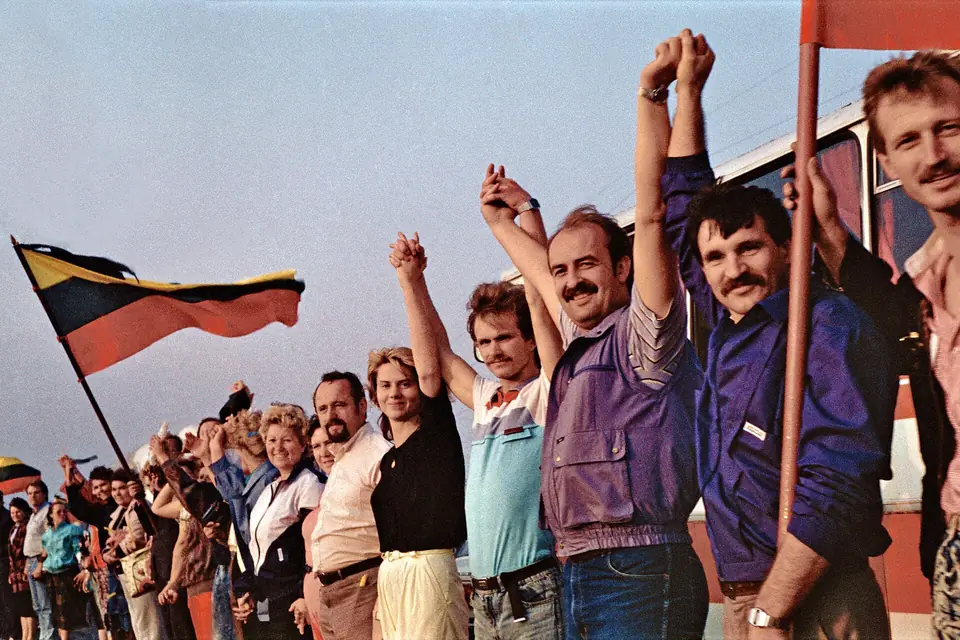
Raised hands and Lithuanian flags in the chain.Kusurija · CC BY-SA 3.0 · Wikimedia Commons 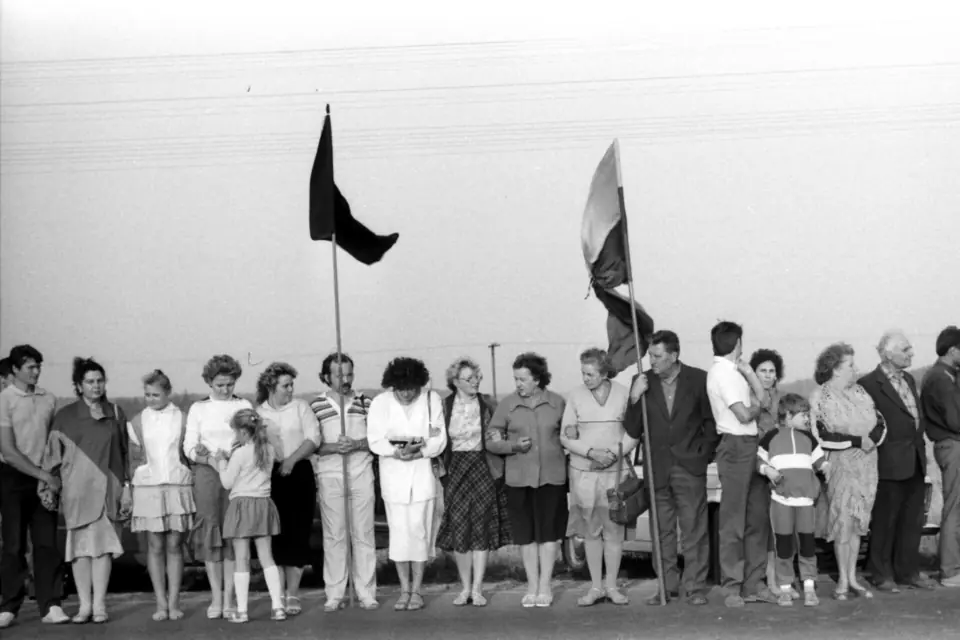
Holding hands in the Pasvalys district of Lithuania, under a black flag.Rimantas Lazdynas · CC BY-SA 3.0 · Wikimedia Commons Listen: Estonian Radio, 18:30–19:00 — Estonian Radio’s correspondent in Lithuania at 6:08
Lithuania
Pasvalys – Panevėžys
Estimates of the turnout varied. Reuters reported about 1,000,000 Lithuanians and 700,000 Estonians; organizers had expected 1,500,000 people in all.
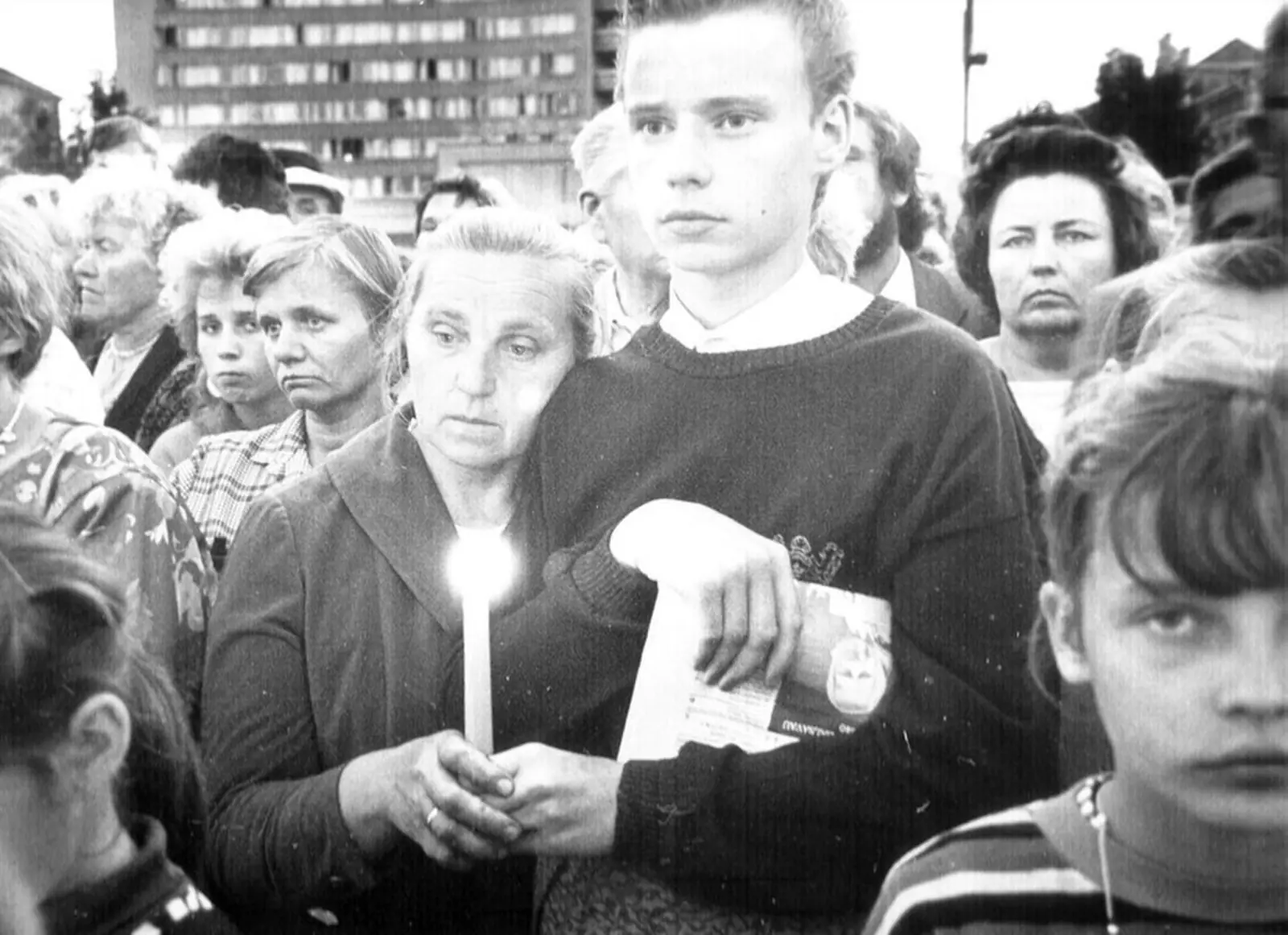
An event in Panevėžys on today’s Freedom Square, then Lenin Square.Jonas Ambraška · CC BY-SA 4.0 · Wikimedia Commons 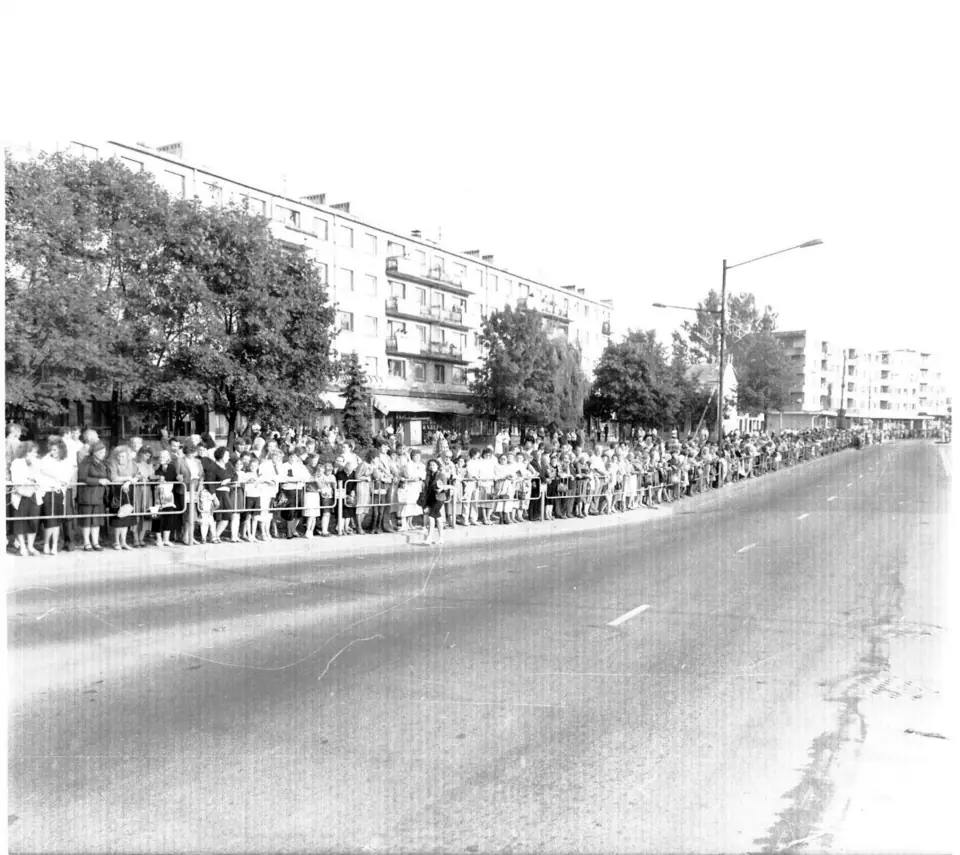
The chain in Panevėžys.Jonas Ambraška · CC BY-SA 3.0 · Wikimedia Commons 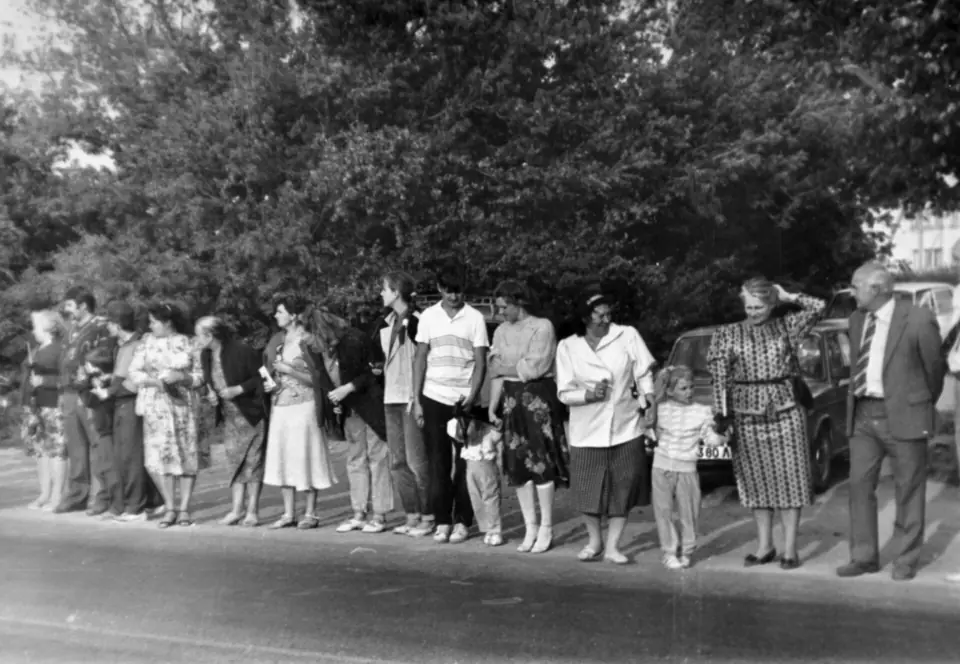
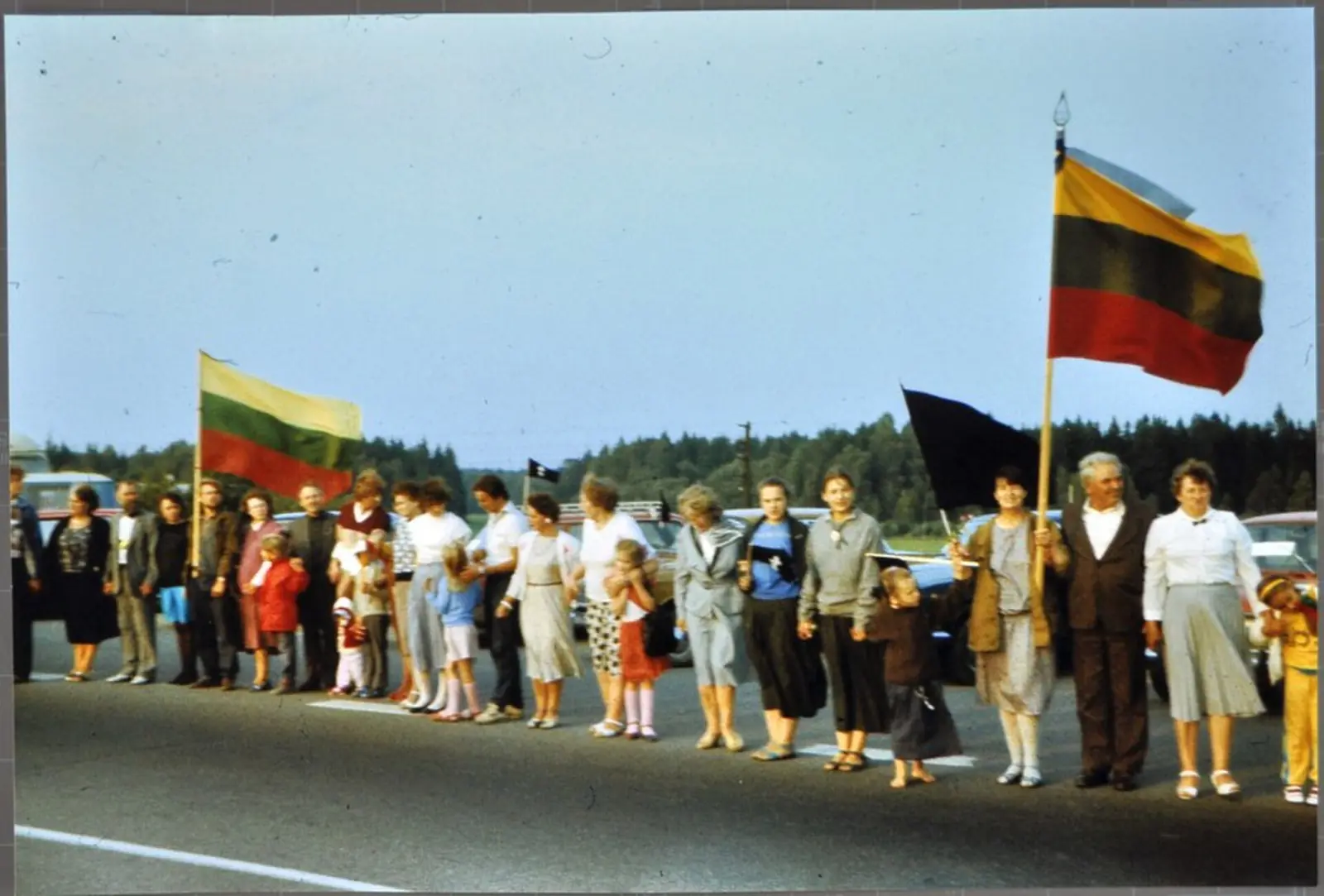
The chain at Šilagalys, in the Panevėžys district.Vanda Mačiekienė (Europeana 1989) · CC BY-SA 3.0 · Wikimedia Commons 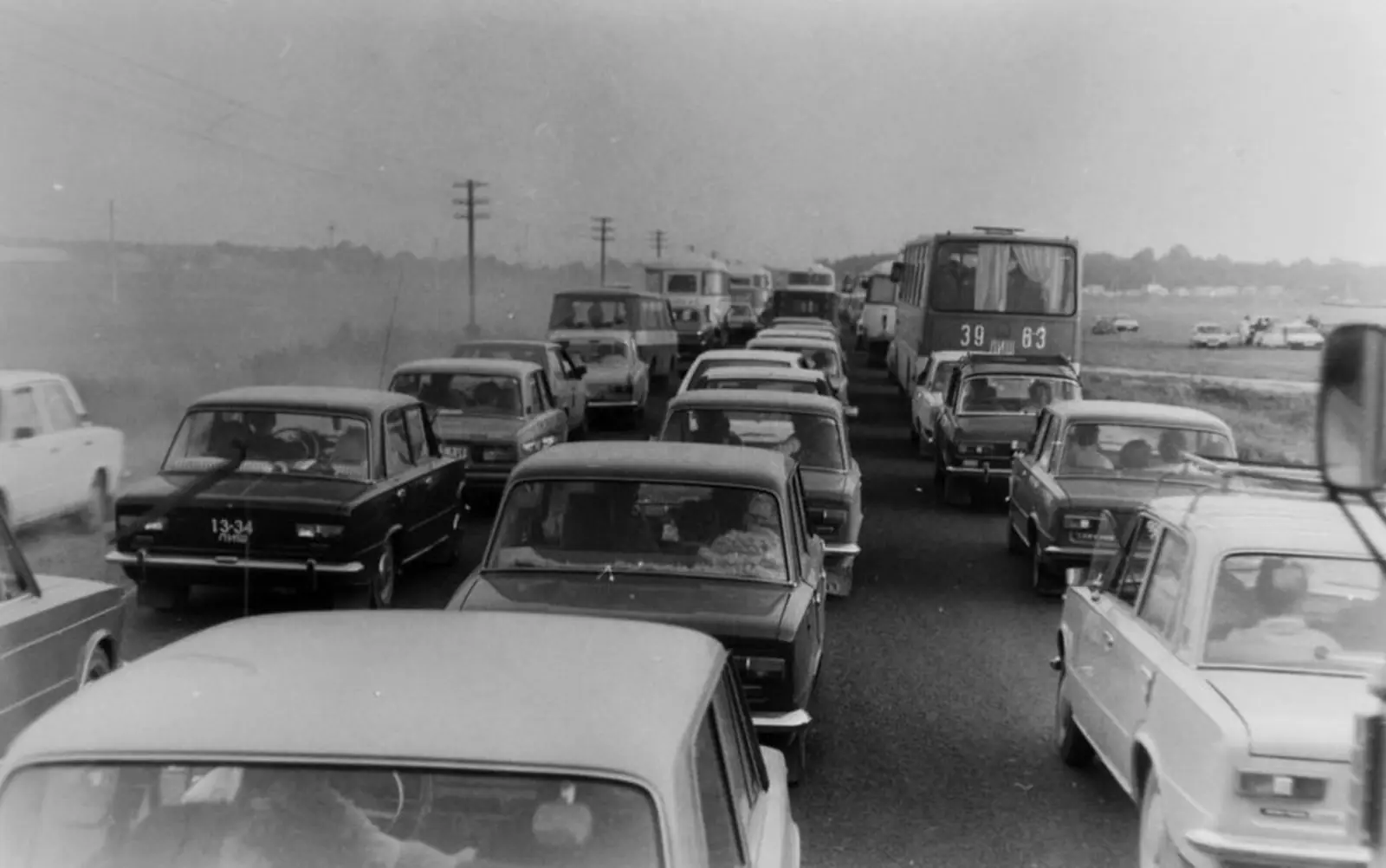
The traffic jam afterwards, as people drove back to Panevėžys.Petras Kareckas · CC BY-SA 4.0 · Wikimedia Commons Lithuania
Ukmergė – Širvintos
The last stretch followed the A2 highway through Ukmergė and Širvintos and into Vilnius along Ukmergės Street. Airplanes flew over the chain to help coordinate it.
Near Širvintos, Lithuania.Radvilė Morkūnaitė · CC BY-SA 4.0 · Wikimedia Commons 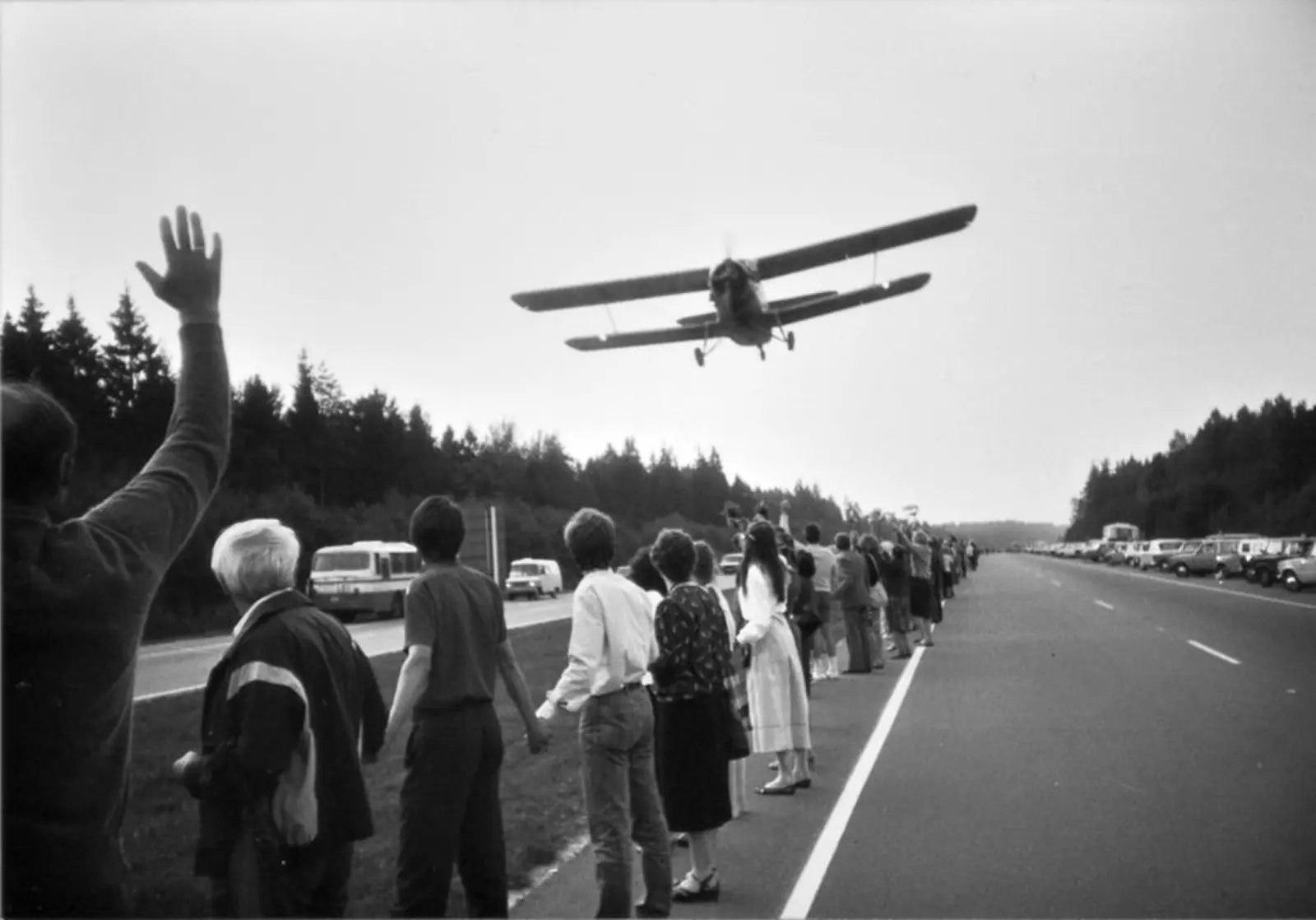
An An-2 airplane over the chain. Airplanes helped coordinate it and were used to photograph and film it.Janina Kafemanaitė-Lesickienė · CC BY-SA 4.0 · Wikimedia Commons 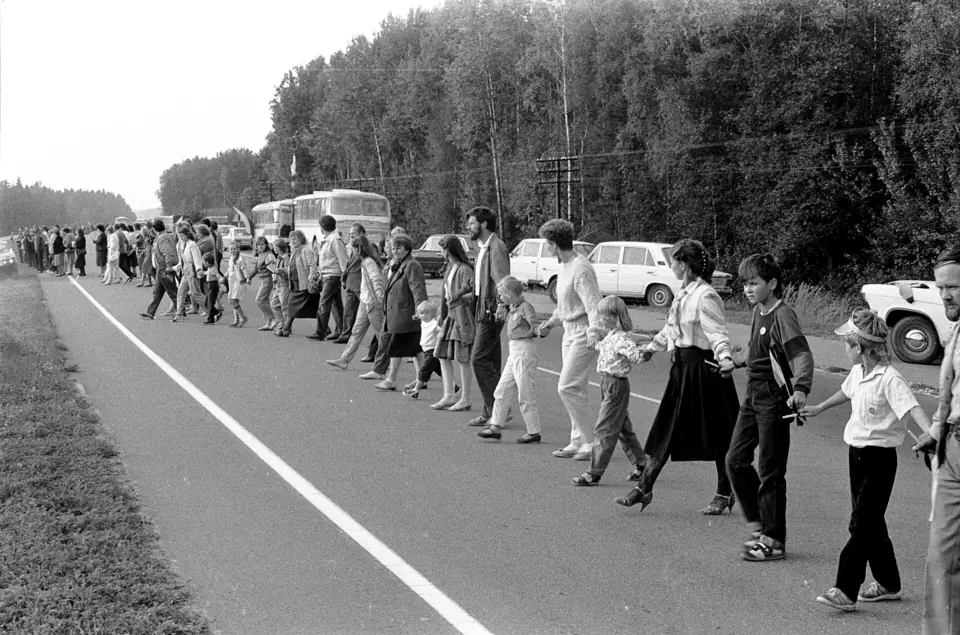
On the Vilnius–Ukmergė highway, in the Molėtai area.Saulius Gruodis, Lithuanian State Central Archives · CC BY 4.0 · Wikimedia Commons 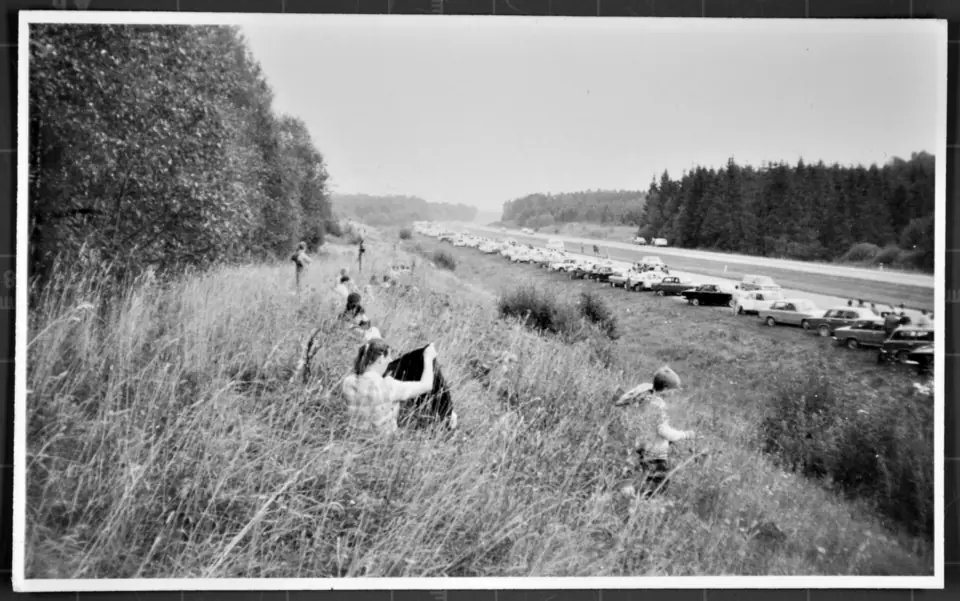
Near Maišiagala, about 22 km from Vilnius. The photographer came here with his family.Gasparas Genzbigelis (Europeana 1989) · CC BY-SA 3.0 · Wikimedia Commons Lithuania
Vilnius
The chain ended at Gediminas Castle Tower, where the Lithuanian flag had flown again since 7 October 1988. About 5,000 people gathered in Cathedral Square with candles.
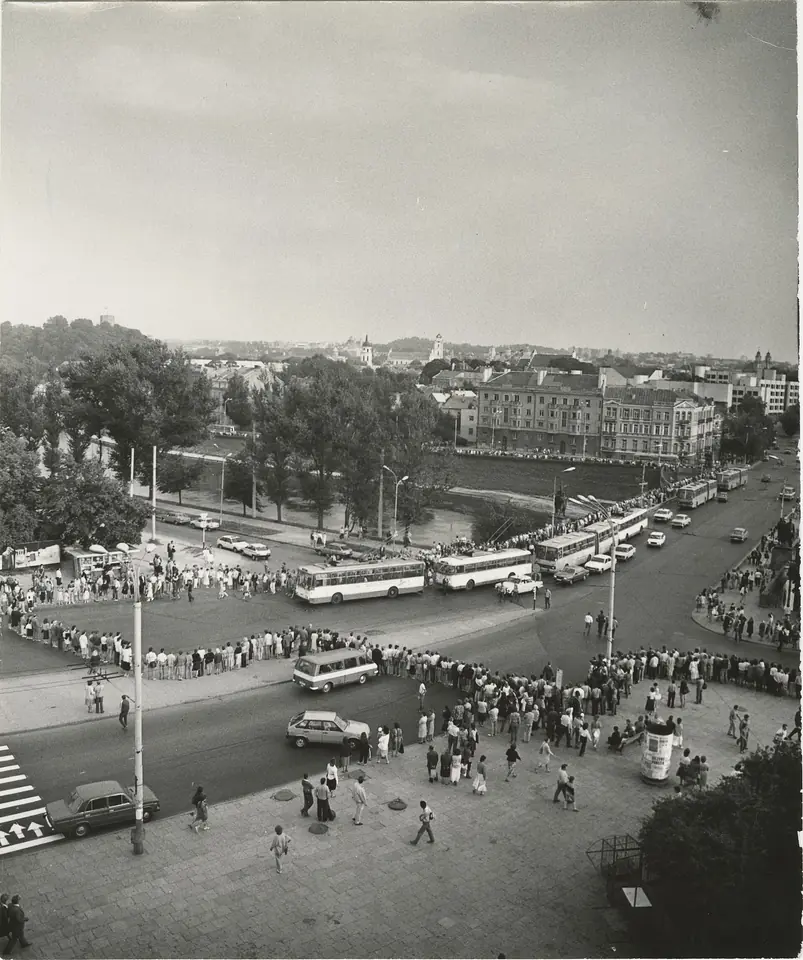
At the Green Bridge in Vilnius.Jonas Kernagis, Lithuanian State Central Archives · CC BY 4.0 · Wikimedia Commons 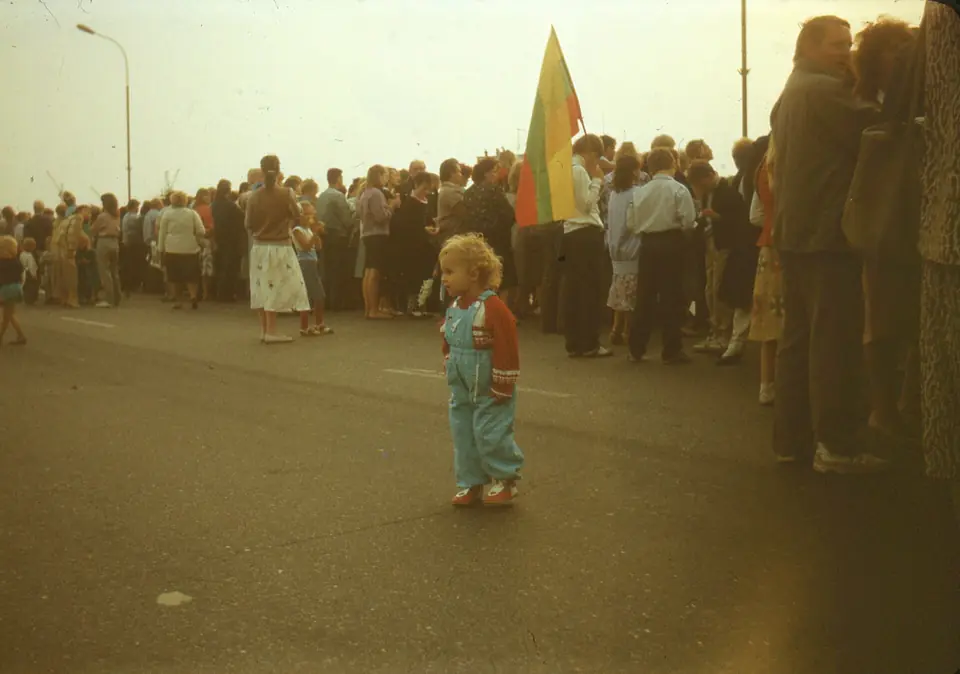
By Šeškinė hill in Vilnius. The girl in front is the photographer’s daughter, Neringa.Gediminas Krunglevičius · CC BY-SA 3.0 · Wikimedia Commons 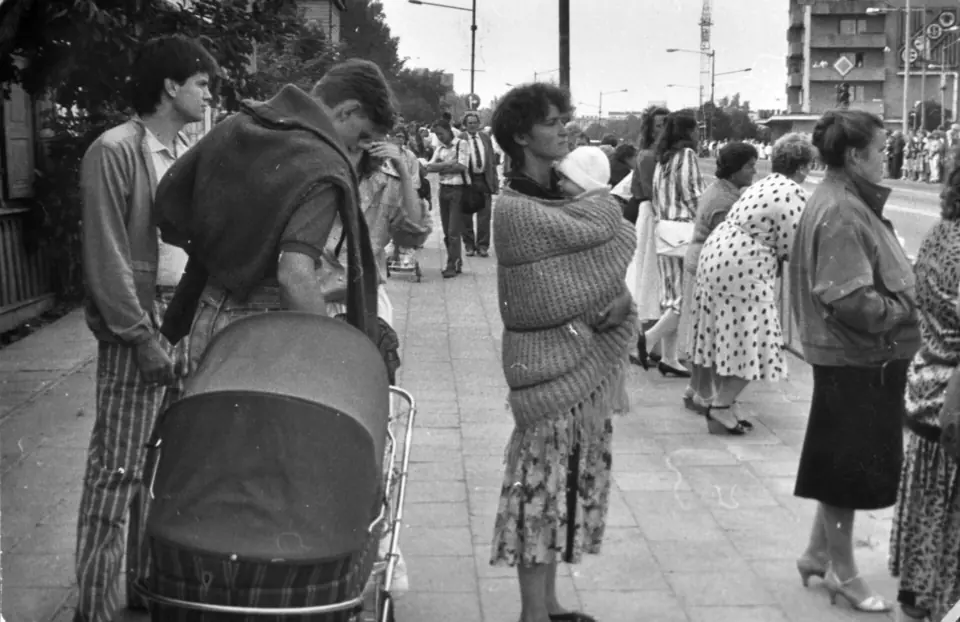
At the corner of J. Basanavičiaus and Vilniaus streets in Vilnius.Eglė Zubienė (Europeana 1989) · CC BY-SA 3.0 · Wikimedia Commons 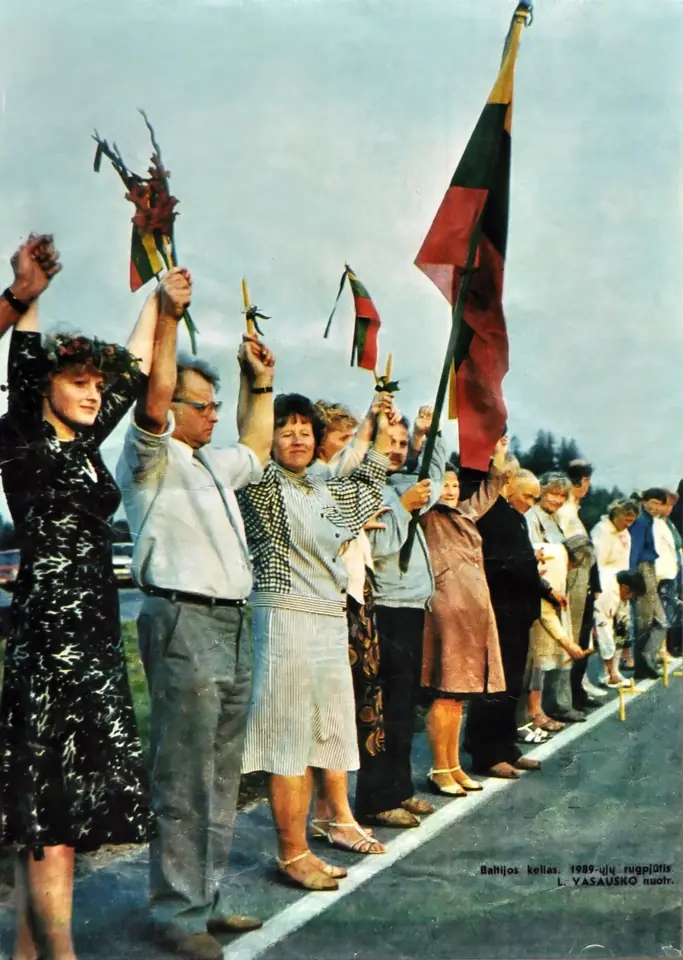
Candles and Lithuanian flags with black ribbons of mourning, as published in Moteris magazine.L. Vasauskas · CC BY-SA 4.0 · Wikimedia Commons 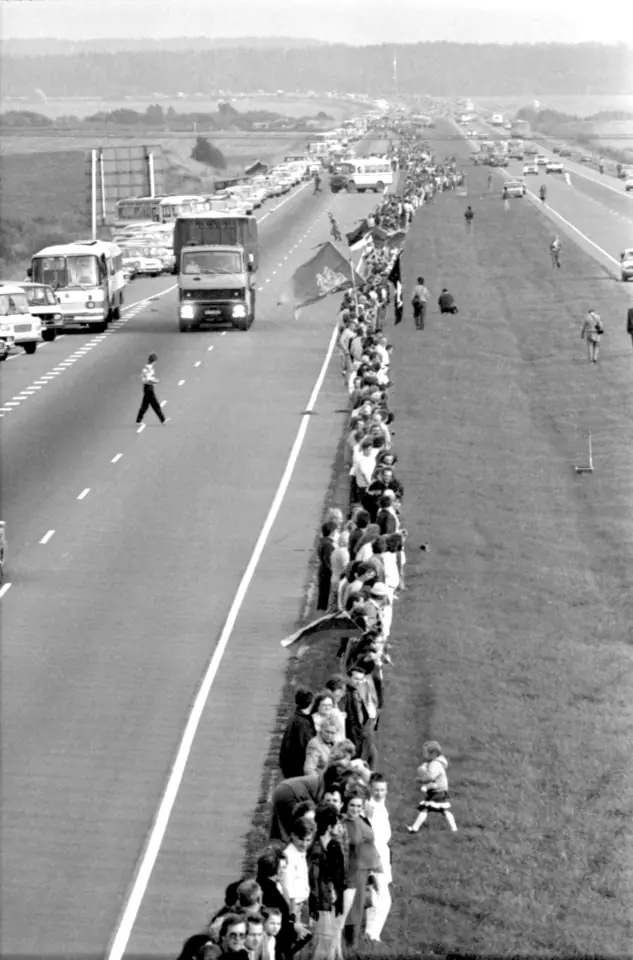
The chain on the highway in Vilnius.Vladas Ščiavinskas, Lithuanian State Central Archives · CC BY 4.0 · Wikimedia Commons Listen: Lithuanian Radio, recorded in Vilnius — A report from the streets of Vilnius
Before and after the chain
The Baltic Way did not come from nowhere. Fifty years of occupation, deportation and exile came before it; restored independence followed within two years.
1918 Independence
- 16.02.1918Lithuania declares independence in Vilnius.
- 24.02.1918The Republic of Estonia is proclaimed in Tallinn. The date is still Estonia’s Independence Day.
- 18.11.1918Latvia declares independence in Rīga.
1939–1949 The pact, war and occupation
- 23.08.1939Nazi Germany and the Soviet Union sign the Molotov–Ribbentrop Pact. A secret protocol divides Eastern Europe between them and places the Baltic states in the Soviet sphere.
- 06.1940After Soviet ultimatums on 15 and 16 June, the Red Army occupies all three countries. In August 1940 they are annexed into the USSR.
- 14.06.1941The first mass deportations take place in all three countries on the same day. About 45,000 people are taken from the Baltic states to Siberia and other remote parts of the Soviet Union, and many of the men are sent to prison camps.
- 1941–1944Nazi Germany occupies the region after invading the Soviet Union.
- 1944As the Red Army returns, people flee west by small boat to Sweden or overland to Germany. By the end of the war about 300,000 have left the three countries: around 80,000 from Estonia and 60,000–70,000 from Lithuania, and by early 1945 about 170,000 Latvians are in refugee camps in Germany. After years in the camps, many settle in Sweden, the United States, Canada, Britain and Australia, where they build the Baltic diaspora.
- 25.03.1949Operation Priboi deports about 95,000 people from the three countries in a few days, most of them rural families.
1987–1989 The awakening
- 23.08.1987On the anniversary of the Molotov–Ribbentrop Pact, people gather at Hirvepark in Tallinn, the Freedom Monument in Rīga and the Adam Mickiewicz monument in Vilnius to demand that the secret protocols be made public.
- 03.06.1988Sąjūdis, the Reform Movement of Lithuania, is founded in Vilnius.
- 06.1988Night song festivals at the Tallinn Song Festival Grounds give the movement its name: the Singing Revolution.
- 23.08.1988A mass rally in Vingis Park, Vilnius, condemns the pact on its anniversary.
- 11.09.1988“Eestimaa laul” (Song of Estonia) gathers a vast crowd, often put at 300,000, at the Tallinn Song Festival Grounds. A speaker calls openly for the restoration of independence.
- 10.1988The Popular Front of Estonia (Rahvarinne) holds its founding congress on 1 October, and the Popular Front of Latvia (Tautas fronte) on 8–9 October.
- 16.11.1988Estonia’s Supreme Soviet adopts the Sovereignty Declaration, putting Estonian laws above Soviet ones.
- 24.02.1989On Independence Day morning the blue-black-white flag is raised on Tall Hermann tower in Tallinn.


1989 The chain
- 12.08.1989At Lenči, near Cēsis, the three movements take their final joint decisions on the Baltic Way and adopt the Cēsis Communiqué. The meeting place is kept secret.
- 23.08.1989The Baltic Way: about two million people join hands for 15 minutes from 19:00, along about 675 km from Tallinn through Rīga to Vilnius.
- 26.08.1989A Communist Party Central Committee statement read on Soviet television denounces “nationalist, extremist groups” and warns of “catastrophic” consequences. The next day it runs on the front page of Pravda. The threats are not carried out.

1989–1994 Freedom restored
- 24.12.1989The USSR Congress of People’s Deputies admits the secret protocols existed and declares them invalid from the moment of signing.
- 11.03.1990Lithuania restores its independence, the first Soviet republic to do so.
- 1990Estonia (30 March) and Latvia (4 May) declare a transition to restored independence.
- 13.01.1991Soviet forces storm the Vilnius TV Tower. Fourteen unarmed civilians are killed. The same day, people in Rīga start building barricades around key buildings.
- 20.01.1991In Rīga, OMON special police attack the Latvian Ministry of the Interior. Two police officers, two cameramen and a 17-year-old schoolboy die of their wounds. People keep guarding the barricades until about 27 January.
- 20.08.1991During the coup attempt in Moscow, Estonia restores its independence. Latvia follows on 21 August.
- 06.09.1991The Soviet government recognizes the independence of Estonia, Latvia and Lithuania.
- 1993–1994The last Russian troops leave Lithuania on 31 August 1993, and Estonia and Latvia on 31 August 1994.


2004– Legacy
- 2004The three countries join NATO on 29 March and the European Union on 1 May.
- 200938 documents of the Baltic Way are added to UNESCO’s Memory of the World Register. The European Parliament makes 23 August a day of remembrance for the victims of Stalinism and Nazism.
- 02.07.2013A Baltic Way alley opens at the European Parliament in Brussels, with a plaque honoring Europe’s longest human chain.
- 11.09.2013Inspired by the Baltic Way, about 1.6 million people form the Catalan Way, some 400 km across Catalonia.
- 23.08.2019On the 30th anniversary, the Hong Kong Way stretches about 50 km across the city. Organizers estimate 210,000 people.


The day on the radio
Estonian Radio’s three-hour live program “Meie hoiame ühte” (We Hold Together), in the ERR archive. In Estonian.
- 17:05Ott Kool reports from Rakvere as people gather. Listen 05:55
- 17:08Ain Saarna live from Rapla. Listen 08:58
- 17:10Vello Lään live from Türi. Listen 10:24
- 17:18Archive recordings of Konstantin Päts and Jaan Tõnisson, leaders of the pre-war republic. Listen 18:23
- 17:28Harri Tiido reads what the foreign press is saying. Listen 28:22
- 18:06A conversation with Reet Marten-Sehr from Canada: the diaspora joins in. Listen 16:25
- 18:15The memorial stone is unveiled in Türi. Listen 25:39
- 18:21Raul Mälk at Hirvepark, where the secret protocols were first discussed in public in 1987. Listen 31:56
- 18:34The writer Anna Žigure reports from Latvia. Listen 04:15
- 18:36Valvi Strikaitienė reports from Lithuania. Listen 06:08
- 18:48Madis Ligi in Nuia, close to the Latvian border. Listen 18:24
- 18:52Tõnis Mägi sings “Koit” (Dawn), an anthem of the Singing Revolution. Listen 22:58
- 19:0019:00, the chain closes. Heinz Valk speaks from Toompea. Listen 00:55
- 19:03Church bells ring out across Estonia. Listen 03:19
- 19:05Marju Lauristin, one of the leaders of the Popular Front, speaks. Listen 05:55
- 19:14Arnold Rüütel, chairman of the Presidium of Estonia’s Supreme Soviet, speaks. Listen 14:30
- 19:24Heinz Valk reads Rein Veidemann’s “Prayer”, a spell for freedom. Listen 24:55
- 19:29Marju Lauristin closes: “Jääme kokku!” (Let’s stay together!) Listen 29:08
- Estonian Radio, 17:00–17:50
- Estonian Radio, 17:50–18:30
- Estonian Radio, 18:30–19:00
- Estonian Radio, 19:00–19:55, live from Toompea
- Lithuanian Radio, recorded in Vilnius
Films
 Super 8 film by the road1989 · Margus Kiis · CC BY 3.0 · 0:28. Shot by Margus Kiis a couple of kilometers from the Latvian border on 23 August 1989.
- Raw 16 mm film from the day1989 · ETV · ERR archive · 18:19. Unedited footage that ETV’s “Vaatevinkel” crew shot along the chain on 23 August 1989.
- The Baltic Way in Estonia, Latvia and Lithuania1999 · ETV · ERR archive · 48:26. ETV documentary built from footage of the day in all three countries. Arnold Rüütel, Marju Lauristin, Lagle Parek, Rein Taagepera and Edgar Savisaar speak.
- “Ärgake Baltimaad!”2019 · ETV · ERR archive · 57:18. A film for the 30th anniversary: the organizers and the people who stood in the chain remember. Much of the archive footage was shown publicly for the first time.
 Near Iecava, Latvia1989 · Amateur film · Aleksandra Pelēča lasītava · 5:14. People from the “Virbi” farm in the Talsi district on the Rīga–Bauska highway.
 On the Pskov highway near Ieriķi1989 · Video: Jānis Lācis. The chain on the old Rīga–Pskov highway, filmed by Jānis Lācis.
 Near the village of Dumbliai, Lithuania1989 · Amateur film · Ąžuolynas Library, Kaunas. Home footage of the chain by a country road, shared by Kaunas’s public library.
 Rokiškis people in the Baltic Way1989–2009 · Rokiškis Regional Museum · Europeana 1989. The museum’s film about the people of Rokiškis who stood in the chain, made for the 20th anniversary.
 “Baltijas ceļš – ceļš uz brīvību”2019 · ReTV. ReTV’s documentary for the 30th anniversary: back to 1989 through the eyes of those who were there.
 The Baltic Chain, from “The Singing Revolution”2006 · The Singing Revolution (film) · 2:00. A clip from the American documentary about Estonia’s nonviolent road to independence.
 30 years since the 600-km human chain2019 · euronews. euronews on the anniversary, with archive footage and voices from the chain.
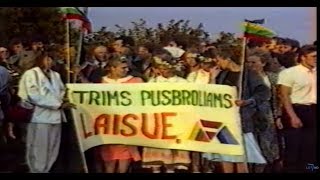 “Bunda jau Baltija”, 19891989 · LRT · 3:59. The anthem of the chain over LRT’s footage from 23 August 1989.
 The Hong Kong Way2019 · AP Archive · 1:16. 23 August 2019: protesters in Hong Kong form human chains on the Baltic Way’s 30th anniversary.
Stories
“Millest koosnes Balti kett?” (What was the Baltic Way made of?): fifteen short Vikerraadio stories by Urmas Vadi from 2019, each about four minutes.
- People
- The Seiko watch lost in the chain
- A new Baltic Silk Road
- Hands
- The idea
- Words
- Molotov and Ribbentrop
- Erika Salumäe, just home from Lyon with a world title
- Being together
- The song “Ärgake Baltimaad”
- Money
- A Minolta 7000AF camera
- The black Volga racing to Vilnius
- Latvian love
From the archive
Photographs taken on 23 August 1989 by people in the chain and by press photographers.


Teaching this in class? There is a free 45-minute lesson plan.